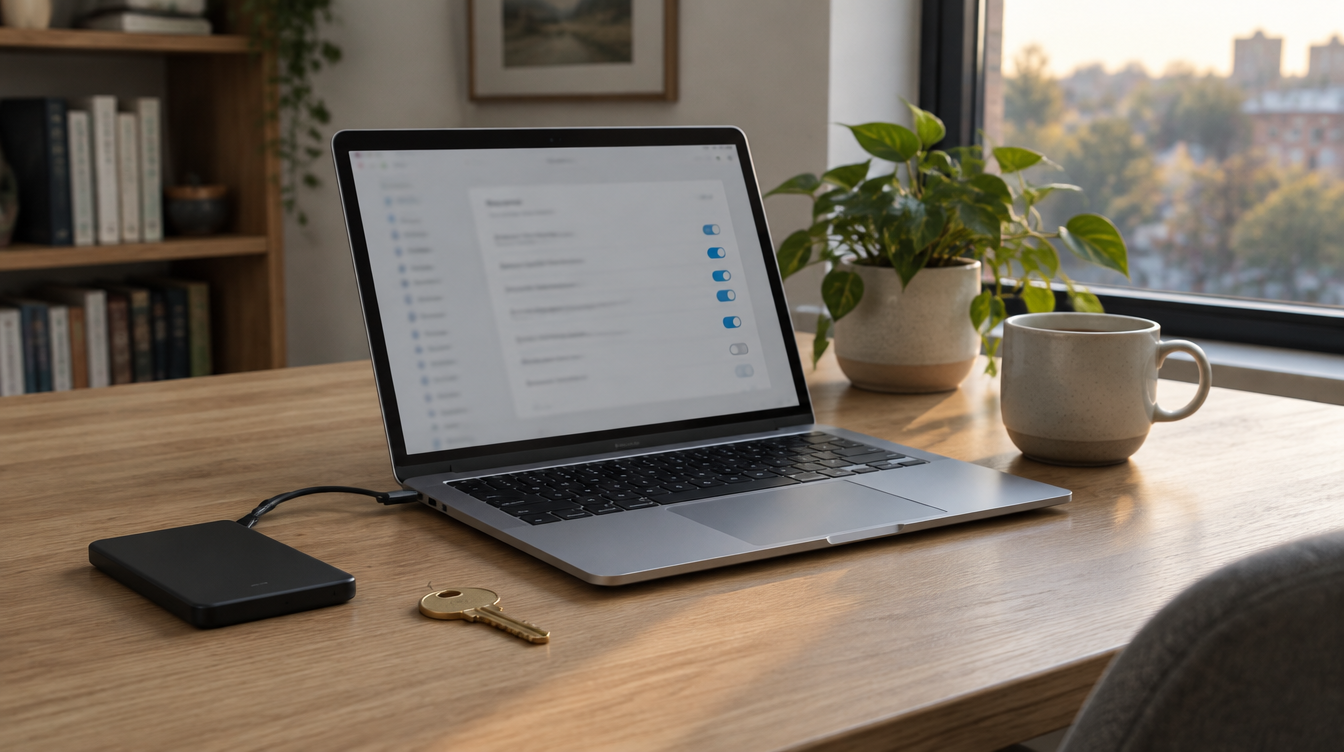
To turn on Full Disk Access on Mac, open System Settings, go to Privacy & Security, click Full Disk Access, then add the app with the Add button. That takes under a minute. The harder question is whether the app asking for it deserves that much trust, because this one switch lets an app read nearly every file on your computer, including data that belongs to other apps.
Apple is also getting stricter about it. In an October 2, 2026 note to developers, the company said it will add new controls so this level of access can only be granted through very explicit action by the user. Here is how the setting works today and how to decide when to allow it.
What Full Disk Access on Mac actually allows
Most Mac permissions are narrow: your camera, your contacts or a single folder. This one is the opposite. In Apple’s own wording in the Privacy & Security panel, it lets apps reach “all files on your computer, including data from other apps.” Apple’s Mac User Guide adds that it also reaches Time Machine backups and some administrative settings that apply to every user on the Mac.
In everyday terms, an app with this access can read your saved mail, your Messages history and your browsing history, not just the documents you open in it. Apple pointed to those exact kinds of data in its developer note when it explained why the setting needs tighter rules.
There is a real reason Full Disk Access on Mac exists. Backup tools have to see everything to copy everything, and Apple says that is why the setting was built to step around the usual privacy controls.
How to give full disk access on Mac in 4 steps
The path below comes from Apple’s Privacy & Security guide for Mac, which covers current releases including macOS 27 Golden Gate.
- Open System Settings. Click the Apple menu in the top-left corner and choose System Settings.
- Find Privacy & Security. It sits in the sidebar, usually far enough down that you will have to scroll for it.
- Click Full Disk Access. You will see a list of any apps that already hold the permission, each with its own switch.
- Add the app. Click the Add button, pick the app from the window that opens, then click Open. Check that its switch is on.
Many apps that want Full Disk Access on Mac will send you to this screen on their first launch. Follow that prompt only if you recognize the app and know why it is asking.
App missing from the list? Fixes for full disk access mac not showing
A common snag is opening the panel and not finding the app you expected. The list only shows apps that were added or asked to be added, so a gap there does not mean anything is broken.
- Add it by hand. Use the Add button in step 4 and browse to the app. Most apps live in your Applications folder.
- Terminal and other utilities. If a guide tells you to give Terminal this permission, it is added the same way. Terminal sits in the Utilities folder inside Applications.
- Check the switch. An app can appear in the list with its switch off, which means it still has no access.
- Look in Files & Folders instead. If the app only needs your Desktop, Documents or Downloads folder, Apple offers that narrower option in the same Privacy & Security section.
Apple’s support pages do not say whether an app needs a restart after you grant Full Disk Access on Mac. If it still acts locked out, quitting and reopening it is a harmless thing to try.
Which apps deserve this much trust
A simple rule works for most households: grant Full Disk Access on Mac only when the app truly needs to see everything to do its job. Backup apps are the clearest case, and Apple names them as the reason the permission exists.
| Type of app | Does it usually need this? | A safer option |
|---|---|---|
| Backup tools | Yes, to copy the whole drive | None needed if you trust the developer |
| Chat and messaging apps | Rarely | Deny it, or allow only the folders it asks about |
| AI assistants and agents | Rarely | Grant specific folders through Files & Folders |
| Terminal for one-off fixes | Sometimes | Turn the switch off again when you finish |
Chat apps get extra caution for a reason Apple spelled out: when a messaging app has this access, it is not only your privacy at stake. The people you talk with can be exposed too, since their messages are sitting on your drive.
AI tools are the newer worry. Apple warned that the danger of handing out this kind of access rises as AI agents get smarter and more independent. An assistant that acts for you and can also read every file is a lot of power to give away casually.
Apple’s guide also points out that once a third-party app is let in, whatever it collects falls under that company’s terms and privacy policy, not Apple’s. If you share a Mac with family, check what else is shared too. Our explainer on what Family Sharing can see in your iCloud files covers the cloud side of that question.
What Apple is changing about Full Disk Access
Apple’s note says some developers have misused Full Disk Access on Mac, pulling in files, mail, messages and browsing history without users fully grasping what they agreed to. The fix it describes is more friction at the moment you say yes.
Addressing this is critical.
Apple, in its October 2, 2026 developer update
What Apple has not shared yet matters just as much. The note gives no macOS version, no launch date and no description of what the extra step will look like. It also does not say whether apps that already hold the permission will need to ask again. We will update this guide once Apple publishes the details.
Until then, the four steps above are still how Full Disk Access on Mac works. If you manage several Macs at work, our look at a password utility for FileVault reboots on managed Macs touches on how security settings play out across a fleet.
Frequently asked questions
What does Full Disk Access do on Mac?
It lets an app read all files on your computer, including data stored by other apps. Apple says it also covers Time Machine backups and some administrative settings for every user on the Mac.
Where is Full Disk Access in System Settings?
Open the Apple menu, choose System Settings, then click Privacy and Security in the sidebar. Scroll down if needed and click Full Disk Access.
Is it safe to give an app Full Disk Access?
It is reasonable for a backup app you trust, because it needs to copy everything. For chat apps and AI tools, it is usually safer to say no or allow only specific folders.
Should you turn on Full Disk Access on Mac for this app?
Say yes for a backup app from a developer you trust, and say no, or offer just a folder, for nearly everything else. If you granted it in the past and cannot remember why, open the list today and switch off anything you no longer use. Think of it as the spare key to the whole house: handy for the one person who needs it, a bad idea to hand out at the door.