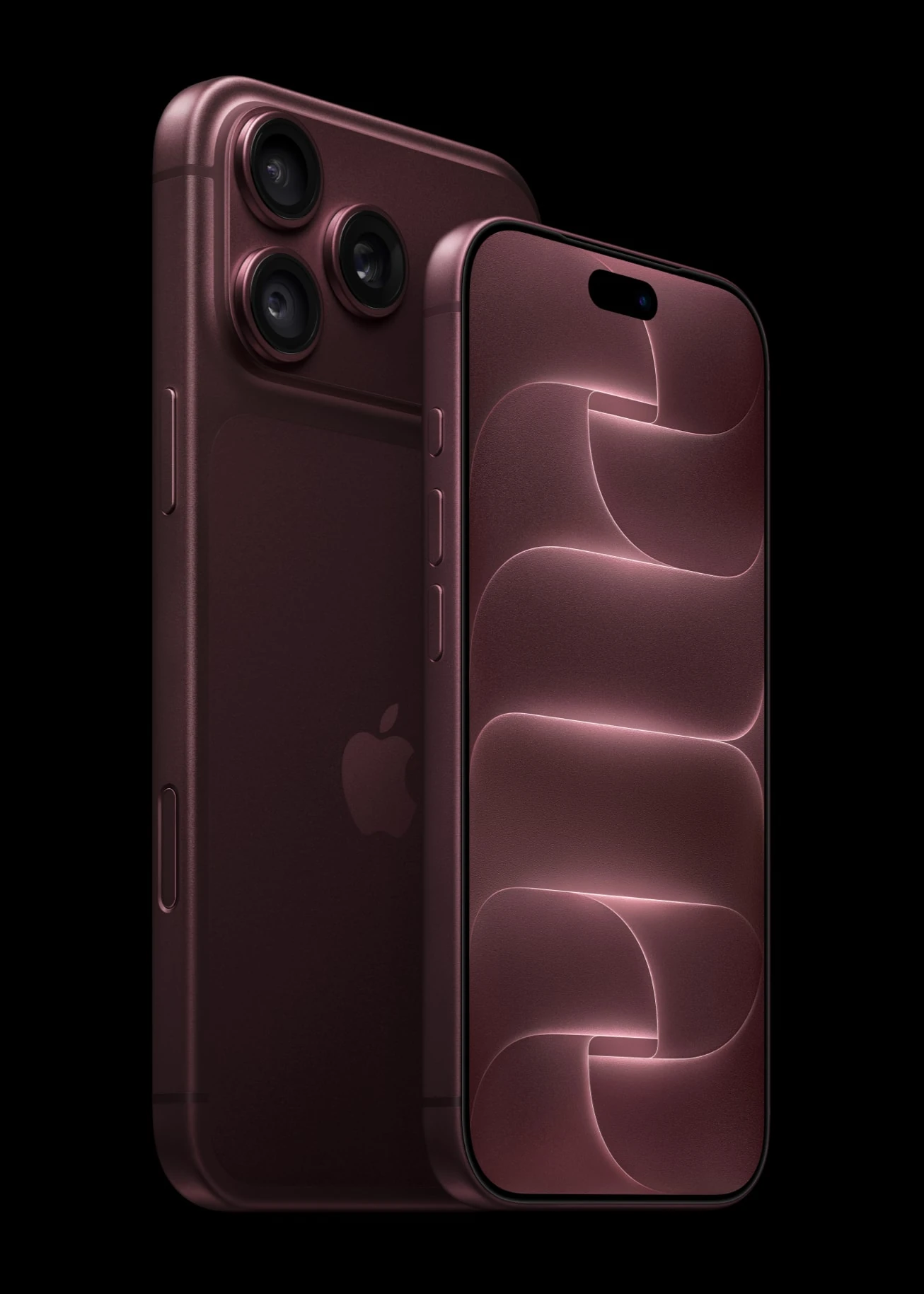
The short version: iPhone 18 Pro is $1,199, iPhone 18 Pro Max is $1,299. Pre-orders open Saturday, September 12, and both ship Friday, September 18. The camera got a real mechanical iris with four stops. The chip moved to 2nm. Every number here comes from Apple’s press release.
Greg Joswiak’s line in the release is: “With iPhone 18 Pro, we’ve made advancements to the areas our users care about most: camera, performance, battery, and intelligence.”
That is a marketing sentence, but it is also an accurate table of contents, so let us take it in that order and go deeper than the bullet points.
The camera: a real mechanical aperture, finally
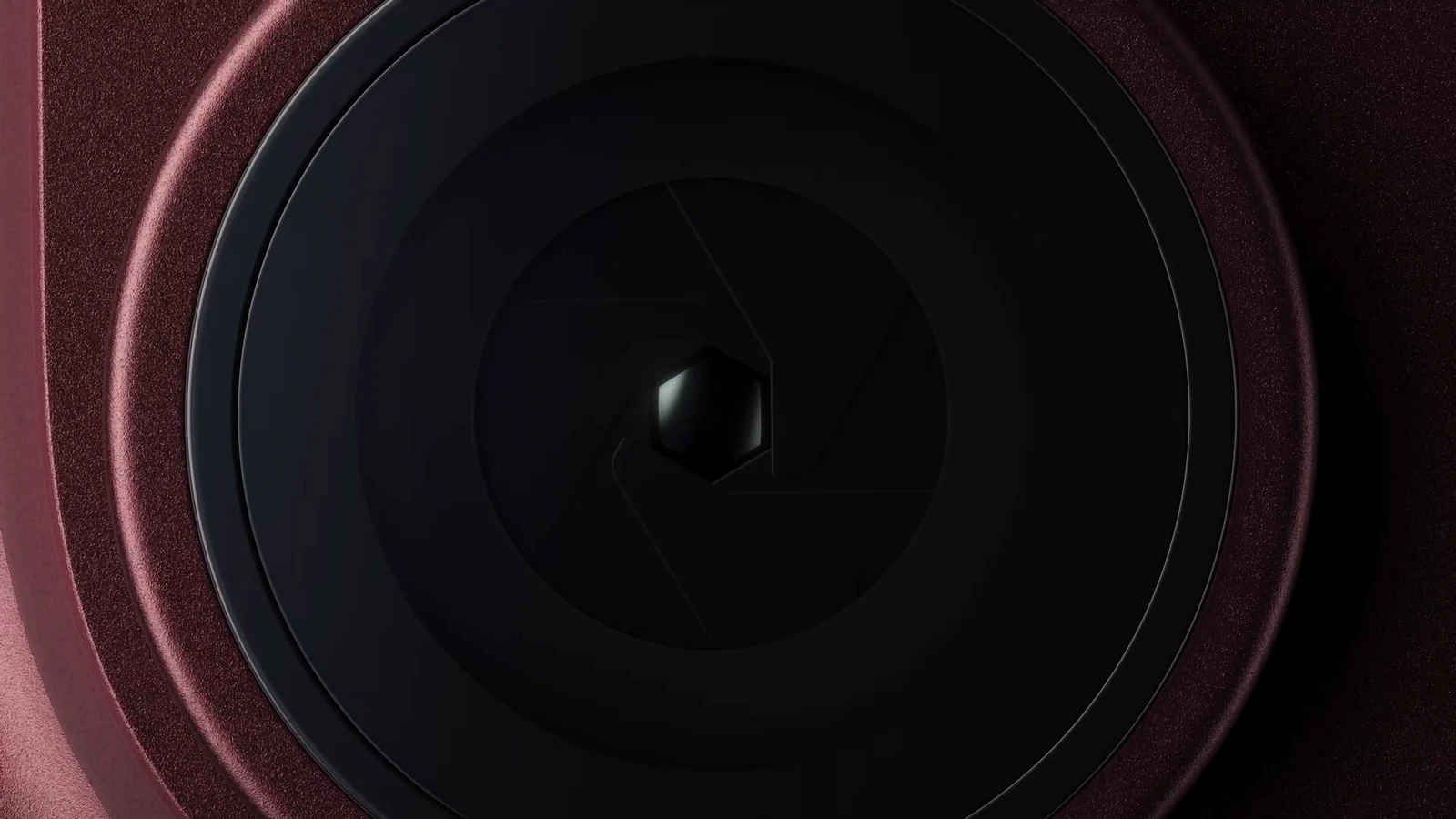
Apple’s spec: a 48MP Fusion Main camera with a variable aperture driven by six laser-cut blades, offering four settings: f/1.48, f/1.8, f/2.8, and f/4.
I want to slow down here, because this is the single most misreported spec of the day and the misreporting is going to be everywhere by tomorrow morning.
What a variable aperture actually changes
Every iPhone before this one had a fixed aperture. The lens opening was one size, permanently, and every “aperture” effect you have ever seen from an iPhone (Portrait mode, Cinematic mode, the blurry background on your dog) was computed. Software looked at a depth map, decided what was background, and blurred it.
Computational blur is impressively good and fundamentally fake. It gets edges wrong. It struggles with hair, chain-link fences, wine glasses, and anything semi-transparent. If you have ever seen an iPhone portrait where someone’s curls got amputated, you have seen the limit of a depth map.
A mechanical iris does not compute anything. It physically restricts the light path. Three real consequences:
1. Real optical depth of field at f/1.48. Wide open, you get genuine background separation created by physics, not by a segmentation algorithm. Edge handling is perfect because there is no edge detection happening. Hair looks like hair.
2. Sharpness recovery at f/2.8 and f/4. Here is the part nobody mentions. Every lens has a “sweet spot,” usually two or three stops down from wide open, where optical aberrations settle down and corner sharpness peaks. Wide open, you fight coma, field curvature, and softness at the frame edges. Being able to stop down to f/2.8 for a landscape or a flat-lay copy shot is a genuinely new capability for an iPhone. Anyone shooting product photos or documents will notice this immediately.
3. Control over motion in daylight. At f/4 you cut roughly 7x the light versus f/1.48 (about 2.8 stops). That means you can shoot video at a proper shutter angle in bright sun without the sensor clipping, which is exactly why cinematographers carry neutral density filters. Apple just built a partial ND into the phone.
What it does not change
It does not turn your iPhone into a full-frame camera. Depth of field is a function of aperture and sensor size and focal length. A small sensor at f/1.48 still has vastly more depth of field than a 35mm sensor at f/1.48. You are getting meaningfully better separation, not medium-format separation. Anyone telling you the physics changed is selling something.
It also does not eliminate Portrait mode. For a headshot with heavy background blur, computation is still doing most of the work. The iris improves the foundation the computation is built on.
The six-blade detail
Six laser-cut blades is a mechanical assembly with moving parts inside a phone that goes in your pocket and gets dropped. As someone who spent years around field-deployed hardware, my honest reaction to “moving parts” is always the same: what is the cycle life, and what happens when it fails?
Apple has not published a cycle rating for the iris. That is a fair thing to note and a fair thing to watch. The blade count also determines bokeh shape: six blades typically produce hexagonal out-of-focus highlights when stopped down, and circular ones wide open. Whether Apple’s blade curvature keeps highlights round at f/2.8 is a real question and it is testable. I intend to test it.
The rest of the camera stack
- A new computational imaging pipeline
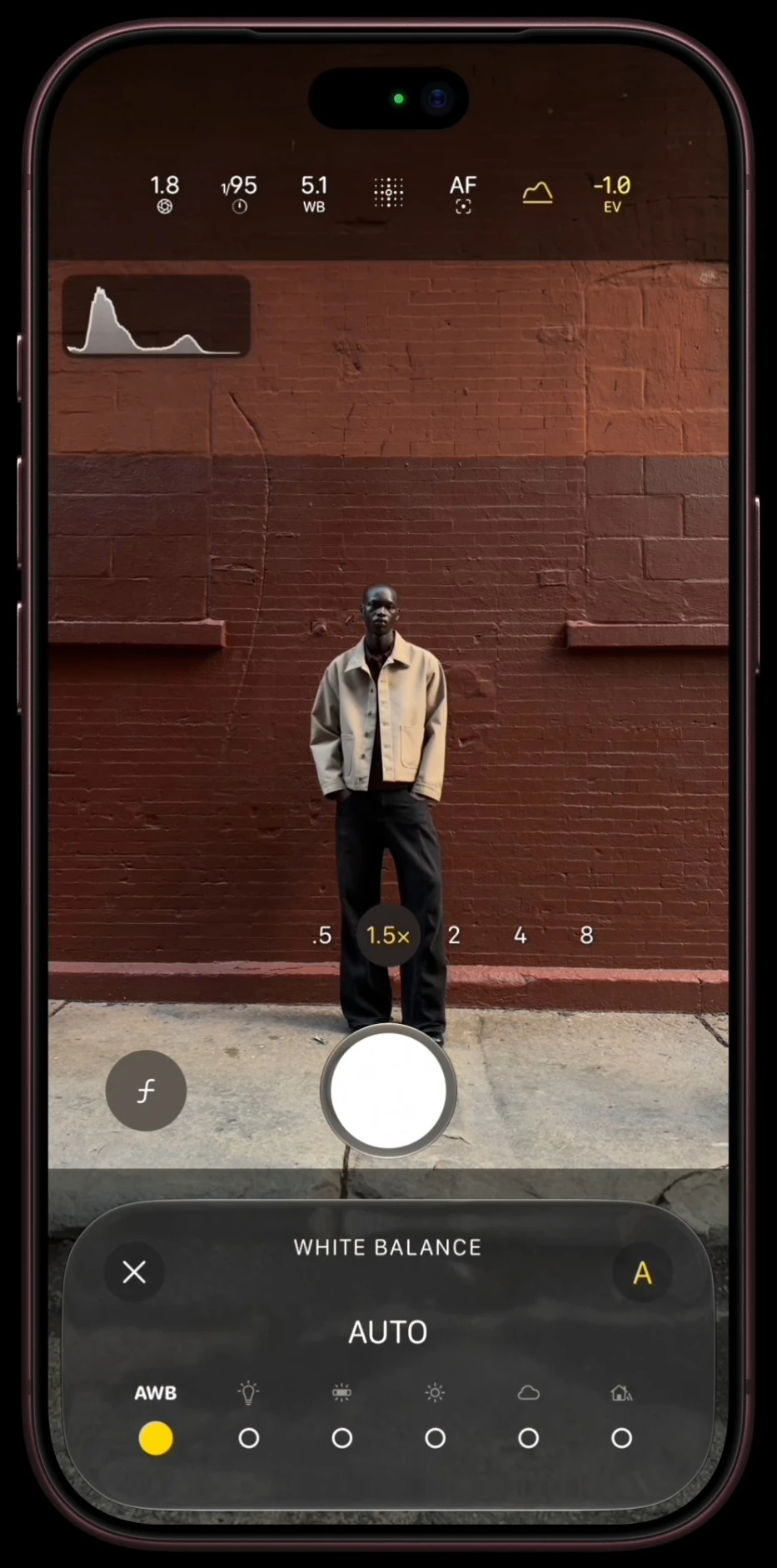
- Pro controls for manual aperture, shutter speed, white balance, and a live histogram
- Cinematic effects that can be applied after capture, up to 60 fps
- 4K Dolby Vision HDR time-lapse
- Apple Reference Image: signed sensor data authentication
That last one deserves more attention than it will get. Apple Reference Image cryptographically signs data at the sensor, which creates a verifiable chain of custody for a photograph. In a year where you cannot trust an image on the internet, a hardware-attested “this came off a real sensor and here is the proof” is a bigger deal for journalism, insurance claims, and legal evidence than it is for your brunch photos. I would like to see the technical documentation on how the signing works and what it covers, and Apple has not published that yet.
The live histogram, by the way, is the feature working photographers have been asking for since roughly 2017. Small thing. Long overdue. Genuinely welcome.
Performance: A20 Pro on a 2nm process
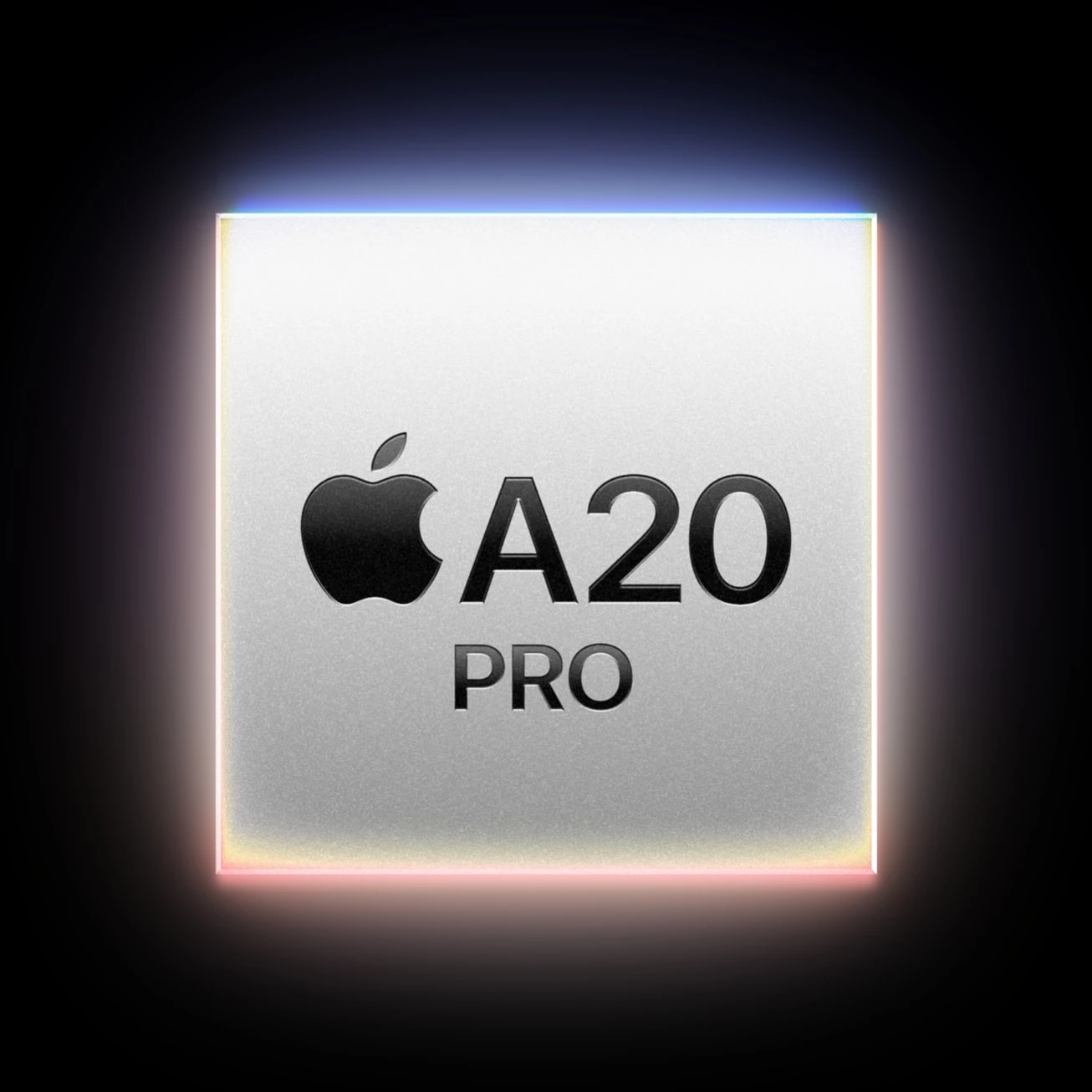
Apple’s confirmed figures:
- A20 Pro built on a 2-nanometer process
- 6-core CPU with integrated Neural Accelerators
- 7-core GPU, 40% faster than A19 Pro
- Dual 16-core Neural Engine, 32 cores total
- N1 wireless chip: Wi-Fi 7, Bluetooth 6, Thread
- C2 cellular modem system
Two things here are more interesting than the headline GPU number.
Neural Accelerators integrated into the CPU cores. This is architecturally different from just having a big Neural Engine off to the side. It means small machine learning operations can run inside the CPU pipeline without the latency cost of handing work off to a separate block. For something like Siri AI parsing what is on your screen, or the Health app scoring a movement evaluation in real time, that round-trip latency is what makes a feature feel instant or feel laggy.
The C2 modem. Apple’s second-generation in-house cellular modem, replacing the Qualcomm relationship it spent years and reportedly billions of dollars trying to exit. Modems are the hardest silicon to get right, because unlike a CPU, a modem has to work correctly on thousands of carrier network configurations worldwide that you do not control. First-generation Apple modem reports were mixed on cellular hold in weak-signal areas. C2 is where we find out if Apple actually solved it. If you live somewhere with marginal coverage, this is the spec to watch in independent testing, not the GPU.
Thread support in the N1 is also quietly notable for anyone with a smart home. It means the phone itself can talk to Thread devices rather than needing a HomePod or Apple TV as a border router.
Thermals: the vapor chamber tripled
Apple says the next-generation vapor chamber has 3x more surface area than the previous generation, delivering up to 40% sustained performance gain.
Again: sustained. Peak silicon performance has not been the limiting factor on an iPhone in years. Heat has. A phone that benchmarks brilliantly for 90 seconds and then throttles is a phone that is fast for screenshots and slow for work.
A vapor chamber is a sealed cavity with a working fluid and a wick. Fluid evaporates at the hot spot, the vapor travels to a cooler area, condenses, and wicks back. It moves heat laterally with dramatically better effective conductivity than solid copper at the same thickness. Tripling the surface area means more contact with the hot spot and more area to reject heat into the chassis. For sustained 4K120 recording or a long ProRes export, this is the change that matters most, and it is the one that will show up least in a benchmark chart.
Battery
iPhone 18 Pro: up to 36 hours of video playback on the eSIM-only models. 50% charge in about 15 minutes wired, 30 minutes wireless.
iPhone 18 Pro Max: up to 45 hours of video playback on the eSIM-only models, and up to 30 hours of usage on a full charge. Five minutes of charging delivers about seven hours of video playback. Apple attributes two additional hours to the larger battery in eSIM-only configurations.
Read the qualifier carefully: eSIM-only models. Removing the physical SIM tray frees interior volume, and Apple is putting battery in it. If you buy a model with a SIM tray, you do not get the top-line number. Apple is being upfront about this in the release, but it will get flattened into “45 hours” in every aggregator post by tomorrow. It is not 45 hours for everyone.
Display and design
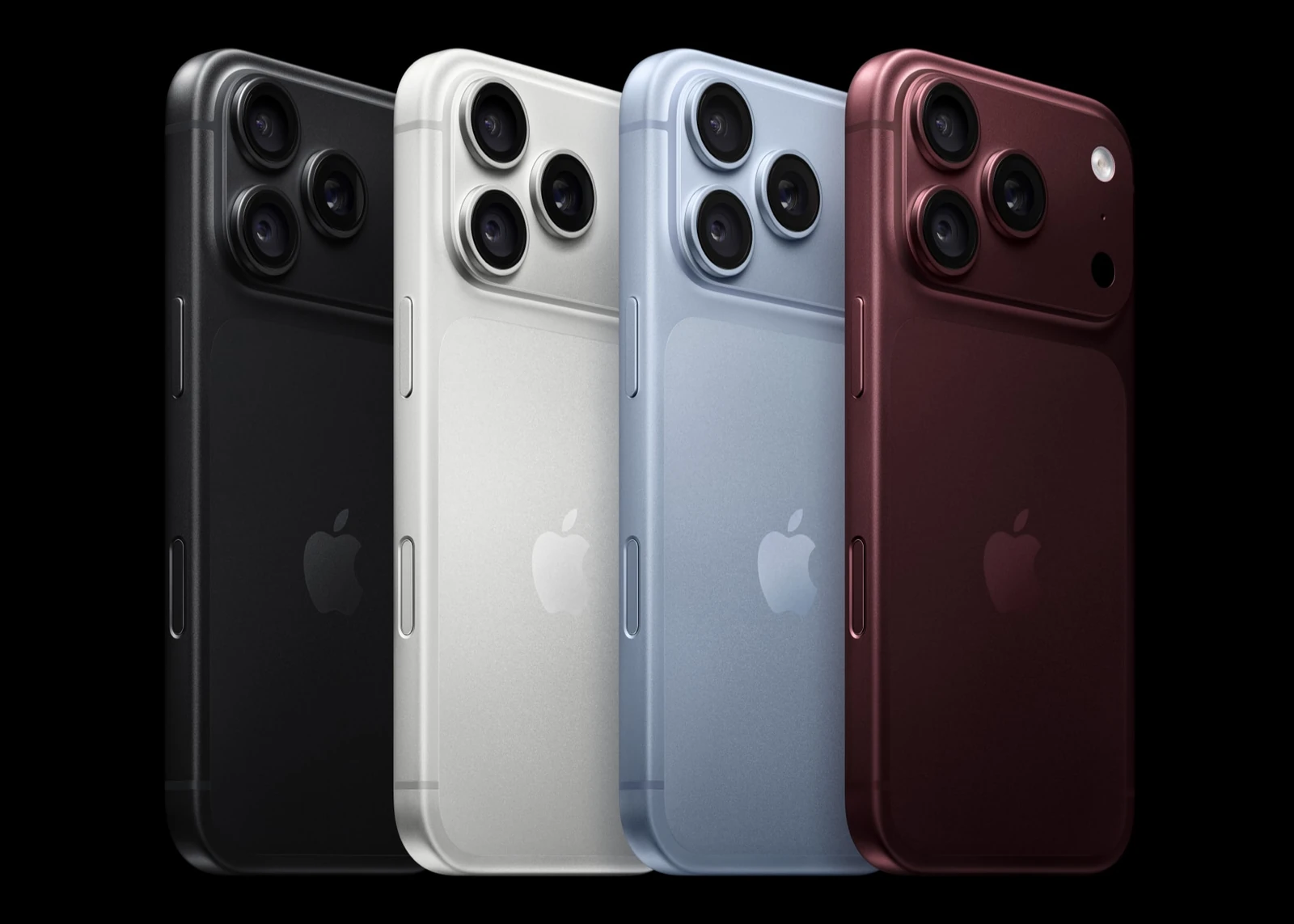
The Dynamic Island got smaller, and it can now show three Live Activities at once. Face ID still works, which is the relevant engineering point: shrinking that cutout while keeping the full TrueDepth array functional means the sensor stack got denser rather than simpler.
Colors: black, silver, glacier, and burgundy, which is the new one. Storage runs 256GB, 512GB, 1TB, and 2TB.
Software: iOS 27 and Siri AI
iOS 27 is a free update starting Monday, September 14. Siri AI begins rolling out the same day as a beta, in English first.
One clarification, because I have already seen this reported wrong today: Siri AI is not a new announcement. Apple announced it in June 2026. Today is the ship date. Apple describes it as running on “the next generation of Apple Foundation Models that run on device and on servers using Private Cloud Compute.”
Apple’s own materials do not name a third-party model partner. Multiple outlets including CNN reported in January 2026 that Apple signed a multi-year deal for Google’s Gemini to help power Siri. I am flagging the distinction on purpose: that is reporting, not an Apple statement, and I am not going to present it to you as confirmed fact.
Pricing, dates, and the trade-in math
- iPhone 18 Pro: $1,199, or $49.95 per month
- iPhone 18 Pro Max: $1,299, or $54.12 per month for 24 months
- Pre-orders: Saturday, September 12
- Availability: Friday, September 18 in 65+ countries, with 20 more on Friday, September 25
- Apple Trade In: $175 to $885 credit for iPhone 13 or later
- Carrier deals: up to $1,200 credit for iPhone 14 or later
- Apple Upgrade (via Klarna): from $34.99 per month for 24 months
A word on that “up to $1,200” carrier number, from someone who has read a lot of contracts: carrier credits are almost never a lump sum. They are bill credits spread across 24 or 36 months, and they typically evaporate if you leave, change plans, or downgrade your line. Apple’s $175 to $885 trade-in is cash value against the purchase, immediately, with no strings. The carrier number is bigger. The Apple number is real today. Which one wins depends entirely on whether you are staying put for three years, and only you know that.
Accessories
- TechWoven Case: $59
- Clear Case: $49
- Silicone Case: $49
- FineWoven Wallet: $59
- Wrist Strap: $29
- Crossbody Strap: $59
Environmental
Apple cites 40% recycled content overall, 100% recycled cobalt in the battery, 85% recycled aluminum in the enclosure, and 50% renewable energy in manufacturing.
Who should actually upgrade
Straight answer, no hedging:
Coming from an iPhone 17 Pro: the variable aperture is the only reason, and it is a real reason if you shoot a lot. Everything else is incremental. If you do not care about the camera, skip it.
Coming from an iPhone 15 Pro or older: yes, and it is not close. Two chip generations, a much better thermal system, meaningfully better battery, and a camera architecture change.
Waiting for the regular iPhone 18: it did not launch today. Apple announced Pro models only. Reporting points to spring 2027 for the standard iPhone 18. That is not Apple-confirmed, but if you were holding out for the $799 model, plan for a wait.
Considering the iPhone Duo instead: different device, different question, five weeks later, $800 more. I broke that one down separately.
What we have not tested
MacReview has not received an iPhone 18 Pro review unit. No hands-on testing has been performed. Everything above is analysis of published specifications and of the engineering principles behind them, which is a different thing from a review and I am not going to blur that line.
When a unit arrives, the tests that matter: sustained thermal performance under a 20-minute export, corner sharpness at each of the four aperture stops on a resolution chart, bokeh highlight shape at f/2.8, C2 modem hold in weak signal, and real battery life on a SIM-tray model versus an eSIM-only model.
That is the review. This is the explainer. I will update this post as Apple publishes more technical documentation, particularly on Apple Reference Image.
Sources: Specifications, pricing, and dates from “Apple debuts iPhone 18 Pro and iPhone 18 Pro Max” (Apple Newsroom, September 9, 2026) and “Apple introduces Siri AI” (Apple Newsroom, June 2026). Gemini partnership reporting via CNN. Product images credited to Apple Inc. MacReview is not affiliated with Apple Inc.
Disclosure: MacReview has not received an iPhone 18 Pro review unit and has performed no hands-on testing of this device. This article contains no affiliate links.
Last updated: September 9, 2026.