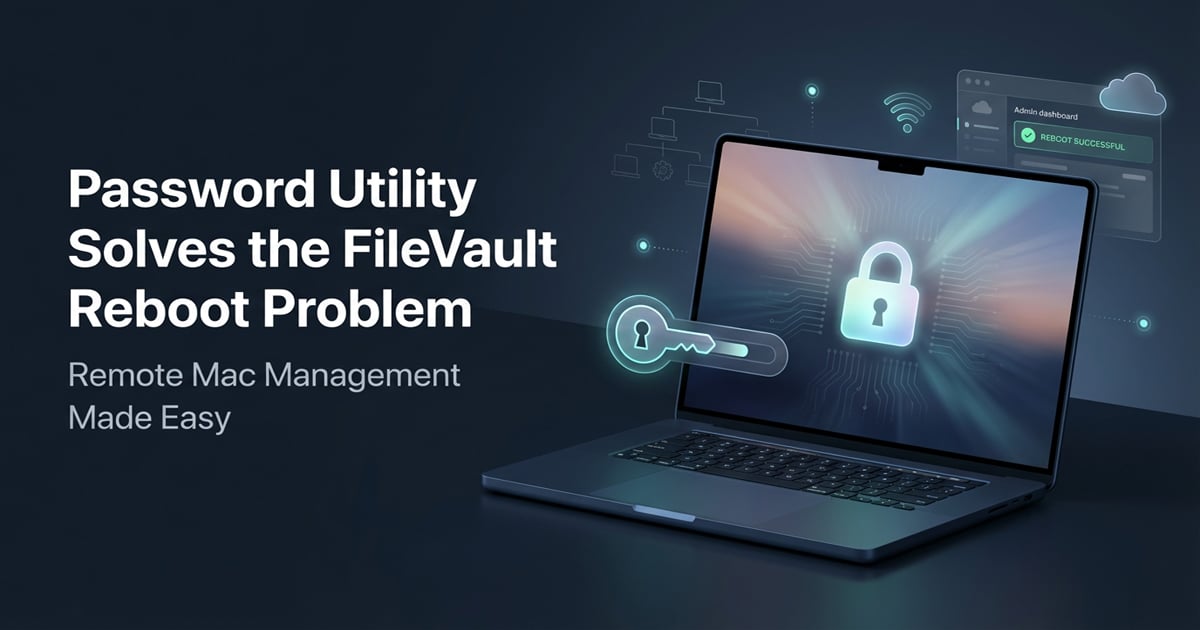
Managing remote Macs presents unique challenges, particularly when FileVault encryption creates accessibility issues during restarts. A new utility from Twocanoes Software addresses this long-standing problem for IT administrators who need reliable access to devices deployed across distributed locations.
The FileVault Reboot Challenge
When a Mac with FileVault encryption restarts, it displays a pre-boot login screen that exists before the full operating system loads. This encrypted state prevents network connectivity and remote access until someone physically enters a password at the device. For organizations managing fleets of Macs in various locations, this limitation effectively renders devices inaccessible after any reboot, whether planned for system updates or required for troubleshooting.
The security benefits of FileVault are well established, but the technology creates operational friction for remote device management. Standard remote management tools can ping the device but cannot establish screen sharing connections or verify successful startup until local authentication occurs.
How Password Utility Works
Password Utility from Twocanoes Software introduces an authenticated restart workflow for Apple Silicon Macs. The software stages user credentials before reboot, allowing the Mac to automatically unlock FileVault and complete the startup process to the macOS login window without physical intervention.
Once the Mac reaches this state, it connects to available Wi-Fi or Ethernet networks and checks in with mobile device management servers. Remote administrators can then establish screen sharing sessions and perform necessary maintenance tasks. This capability is particularly valuable for overnight software updates that previously required coordination with end users.
Additional Features
Beyond the remote restart functionality, Password Utility includes Touch ID integration for Terminal commands. Users can authenticate sudo commands with their fingerprint rather than typing passwords repeatedly. This feature supports improved security practices by allowing IT teams to enforce complex password requirements while reducing the frequency with which users must manually enter credentials.
The utility also provides visibility into Secure Token status, helping administrators verify proper configuration across managed devices.
Pricing and Compatibility
Password Utility is available for $10 per device annually and supports Apple Silicon Macs. The software is designed specifically for environments where physical access to devices is limited or impractical.
FAQ
Q: Does Password Utility work with Intel-based Macs?
A: The utility is designed for Apple Silicon Macs. Compatibility with Intel-based systems has not been confirmed by the developer.
Q: Will this reduce the security provided by FileVault?
A: The utility stages credentials for authenticated restart but does not disable FileVault encryption. The disk remains encrypted, and the tool simply automates the unlock process during reboot using properly authenticated credentials.
Q: Can Password Utility be deployed through mobile device management systems?
A: The software appears suitable for MDM deployment, though specific integration details should be confirmed with the developer based on your particular management platform.
MacReview Verdict
Password Utility addresses a genuine pain point in remote Mac administration. The FileVault reboot issue has long frustrated IT teams managing distributed devices, and this solution provides a straightforward approach to maintaining accessibility without compromising encryption. At $10 per device annually, the cost is reasonable for organizations that regularly encounter remote restart scenarios. The Touch ID integration for Terminal commands adds practical value for technical users, though the authenticated restart capability remains the primary selling point for IT administrators. Organizations managing remote Mac fleets should evaluate whether their restart frequency and support workflows justify the per-device cost.