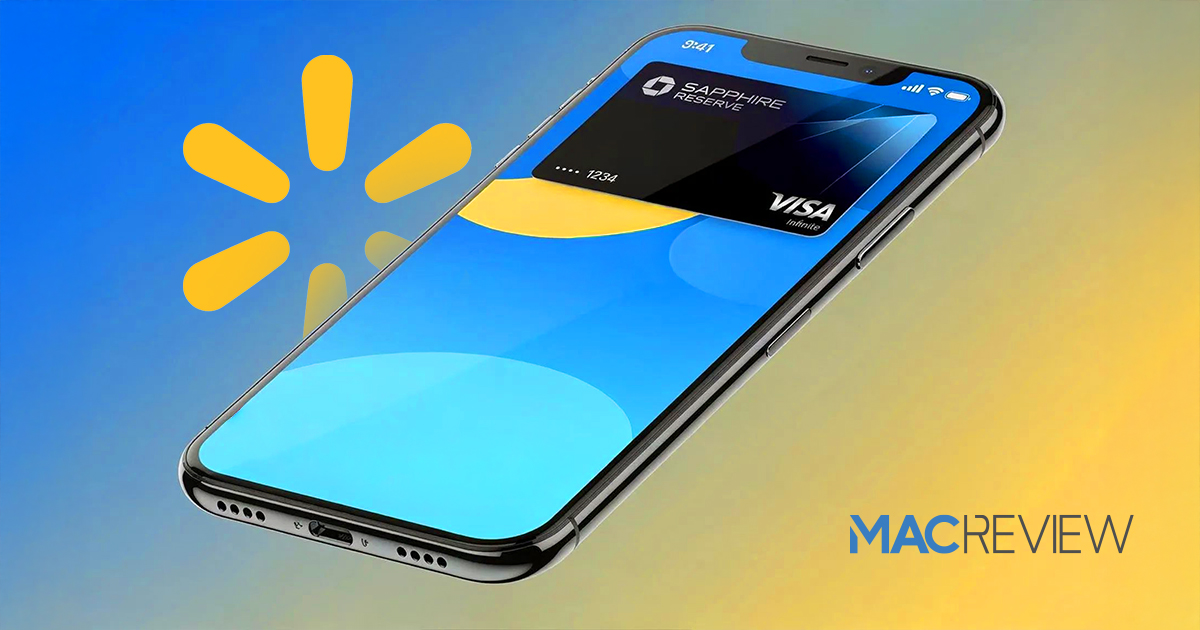
Walmart’s continued refusal to support Apple Pay and other contactless payment methods has resurfaced as a topic of debate across social media platforms. While the retail giant’s decision may appear to be simply about payment preferences, the choice carries significant security implications for customers who shop at the world’s largest grocer.
How Apple Pay Protects Your Payment Information
Apple Pay’s security architecture relies on multiple layers of protection that work together to safeguard sensitive financial data. Understanding these mechanisms helps clarify why contactless payments offer meaningful security advantages over traditional payment methods.
Device Account Numbers and Token Generation
When you set up Apple Pay on an iPhone, Apple Watch, or Mac, the device generates a unique Device Primary Account Number, or DPAN. This number serves as a stand-in for your actual card details and is stored on a dedicated chip called the Secure Element, which operates in isolation from the rest of your device’s systems.
During a transaction, the Secure Enclave verifies your identity through Face ID or Touch ID biometrics. Once authentication is confirmed, it authorizes the Secure Element to generate a cryptographic one-time token specific to that single purchase. This token is what merchants receive, not your actual card number or personal information.
The Data Tracking Trade-Off
Walmart’s decision to maintain its proprietary payment systems, Walmart Pay and Scan and Go, appears to be driven by data collection objectives rather than technical limitations. When customers use these in-house payment methods, every purchase is linked directly to their account profile, creating detailed records of shopping behavior for advertising and marketing purposes.
Contactless payment systems like Apple Pay make this type of comprehensive tracking considerably more difficult. Because these systems don’t share cardholder names or complete card information with merchants, retailers cannot easily build the same level of detailed customer profiles. By requiring customers to either use physical cards or the Walmart app, the retailer maintains access to purchase history data that would otherwise remain private.
Security Risks of Avoiding Contactless Payments
The security concerns extend beyond simple convenience. Physical card transactions expose magnetic stripe or chip data at the point of sale, creating potential vulnerabilities that tokenized contactless payments avoid entirely. Each time a physical card is used, there’s a small but measurable risk of data interception or skimming.
Apple Pay’s token-based system eliminates these exposure points. Even if transaction data were somehow intercepted, the one-time cryptographic tokens would be useless for any subsequent fraudulent activity. Your actual card number never enters the transaction stream, and merchants never receive information that could be used to identify you personally or replicate your payment credentials.
Industry Standard in 2026
Most major retailers have implemented support for Apple Pay and competing contactless payment platforms. The technology has become a baseline expectation for customers who prioritize both convenience and security. Walmart’s position as an outlier becomes increasingly notable as contactless payments gain wider adoption across the retail industry.
The retailer’s stance effectively forces customers to choose between shopping at Walmart or using their preferred secure payment method. For privacy-conscious consumers, this creates a difficult decision between accessing Walmart’s pricing and selection versus maintaining control over their financial data and transaction privacy.
FAQ
Q: Does Walmart have any plans to support Apple Pay in the future?
A: Walmart has not announced any plans to implement Apple Pay or other third-party contactless payment systems. The company continues to promote its proprietary Walmart Pay platform instead.
Q: Can I use my physical Apple Card at Walmart?
A: Yes, you can use the physical Apple Card as a standard credit card at Walmart, though you won’t receive the enhanced security features or higher cashback rate that Apple Pay transactions provide.
Q: Are there other major retailers that don’t accept Apple Pay?
A: While most major retailers now support contactless payments, a small number of large chains continue to resist implementation, though the list has shrunk considerably in recent years as the technology has become standard.
MacReview Verdict
Walmart’s decision to forgo Apple Pay support in 2026 represents more than an inconvenience for customers who prefer contactless payments. It’s a deliberate choice that prioritizes the retailer’s data collection interests over customer security and privacy. The tokenized, biometrically authenticated transaction system that Apple Pay provides offers measurable security advantages compared to traditional card-based payments or app-based alternatives that require sharing detailed purchase histories.
For customers who value payment security and transaction privacy, Walmart’s position creates a legitimate concern. While the retailer certainly has the right to determine which payment methods it accepts, customers should understand that this choice comes with real security trade-offs that go beyond simple payment convenience.