Spotify has launched a new feature for Premium subscribers that automatically reorganizes playlist tracks for smoother transitions between songs. The Smart Reorder tool analyzes beats per minute and musical key to create a more cohesive listening experience, continuing the competitive push among streaming services to enhance audio playback quality.
How Smart Reorder Works
Smart Reorder analyzes two key musical elements to improve the flow between tracks in a playlist. The feature examines the tempo, measured in beats per minute, and the musical key of each song. By grouping tracks with similar characteristics together, the tool creates transitions that sound more natural and less jarring.
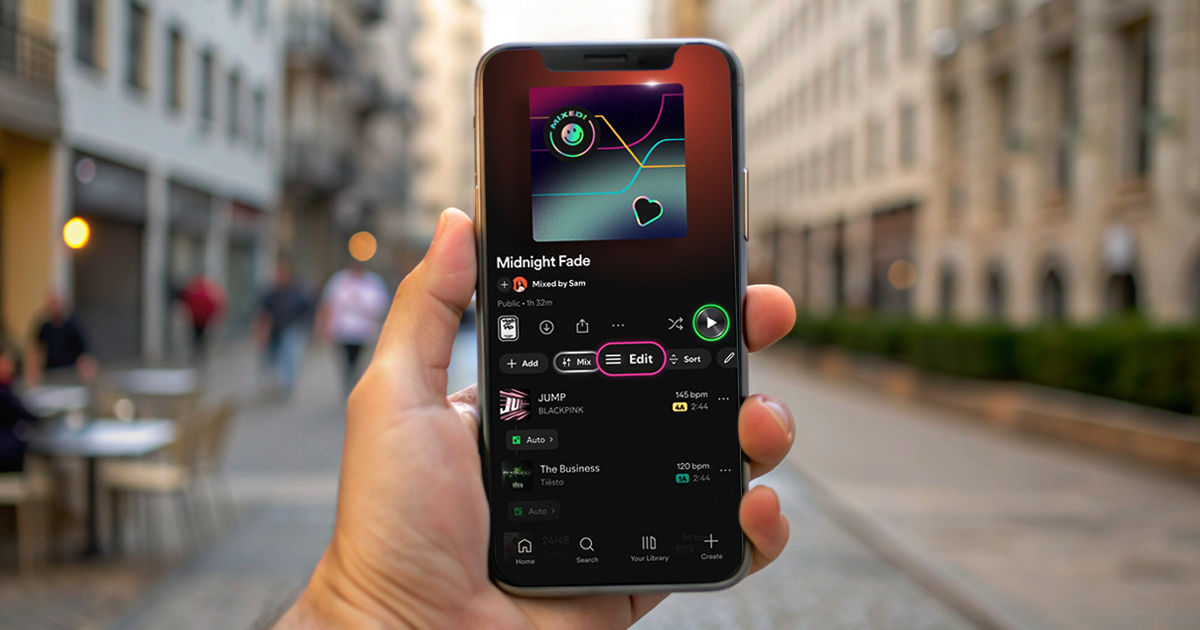
According to Spotify, the feature is available now to Premium subscribers and requires just two steps to activate. Users tap the Mix option on any playlist, select Edit, and then choose Smart Reorder. The system then automatically rearranges the tracks based on their musical properties.
Building on Previous Transition Features
This release follows Spotify’s introduction of adjustable transition points in tracks, which launched in fall 2025. That earlier feature gave users manual control over how songs blend together. Smart Reorder takes a more automated approach, removing the need for individual adjustments while still improving the overall listening experience.
The competitive landscape for music streaming transitions has intensified recently. Apple Music implemented AutoMix as part of iOS 26, offering automated crossfading without requiring user input. Spotify’s Smart Reorder represents a different approach to the same problem, focusing on playlist organization rather than real-time audio mixing.
Availability and Requirements
Smart Reorder is limited to Spotify Premium subscribers. The feature works with user-created playlists and reportedly does not require any additional app updates beyond the current version of Spotify. Users can revert to the original playlist order at any time if they prefer the manual arrangement.
The tool appears in the same playlist editing interface where users already manage track order, add songs, and adjust other playlist settings. This integration suggests Spotify is treating Smart Reorder as a standard playlist management option rather than a separate feature requiring its own interface.
FAQ
Q: Is Smart Reorder available to free Spotify users?
A: No, Smart Reorder is currently limited to Spotify Premium subscribers only.
Q: Can I undo Smart Reorder if I don’t like the new arrangement?
A: Yes, users can revert to the original playlist order at any time through the standard playlist editing tools.
Q: Does Smart Reorder work with all playlists?
A: The feature appears to work with user-created playlists. Compatibility with collaborative playlists or Spotify-curated playlists has not been confirmed.
Q: How does this compare to Apple Music’s AutoMix?
A: While both features aim to improve song transitions, Smart Reorder focuses on rearranging playlist order based on musical characteristics, whereas AutoMix applies real-time audio crossfading between tracks without changing the playlist sequence.
MacReview Verdict
Spotify’s Smart Reorder represents a thoughtful addition to playlist management tools, though it takes a fundamentally different approach than Apple Music’s AutoMix feature. Where Apple focused on real-time audio processing to blend songs together seamlessly, Spotify has opted for an organizational solution that relies on musical theory principles.
The feature’s value will likely depend on individual listening habits. Users who carefully curate playlists with specific track orders may find Smart Reorder disruptive, while those who prioritize continuous flow over intentional sequencing will appreciate the automated optimization. The two-step activation process ensures the feature remains optional rather than intrusive.
For Apple users who maintain subscriptions to both services, Smart Reorder and AutoMix can serve complementary purposes. The competition between streaming platforms continues to benefit subscribers, as each service develops unique approaches to improving the fundamental listening experience beyond catalog size and audio quality.