
Apple Watch does not diagnose sleep apnea, and Apple is explicit that it is not trying to. It uses the accelerometer to detect small wrist movements linked to interruptions in normal breathing, reviews that data every 30 days, and notifies you if the pattern shows consistent signs of moderate to severe sleep apnea. A notification is a reason to book a doctor’s appointment, not a result.
Key Takeaways
- Sleep apnea notifications work on Apple Watch Series 9 and later, Ultra 2 and later, and SE 3, with sleep tracking turned on.
- The watch needs at least 10 nights of sleep data within a 30-day window before it will analyze anything, and it reviews the data every 30 days.
- Apple’s own wording: the feature is “not intended to diagnose, treat, or aid in the management of sleep apnea.”
- Apple also states plainly that “not all people with sleep apnea receive a notification,” so silence from your watch is not an all-clear.
- It is intended for people 18 or older who have not already been diagnosed with sleep apnea. If you have a diagnosis, this feature is not built for you.
- The Health app exports a PDF of your breathing disturbance data to take to a doctor. That is the most useful thing the feature produces.
How Does Apple Watch Detect Sleep Apnea?
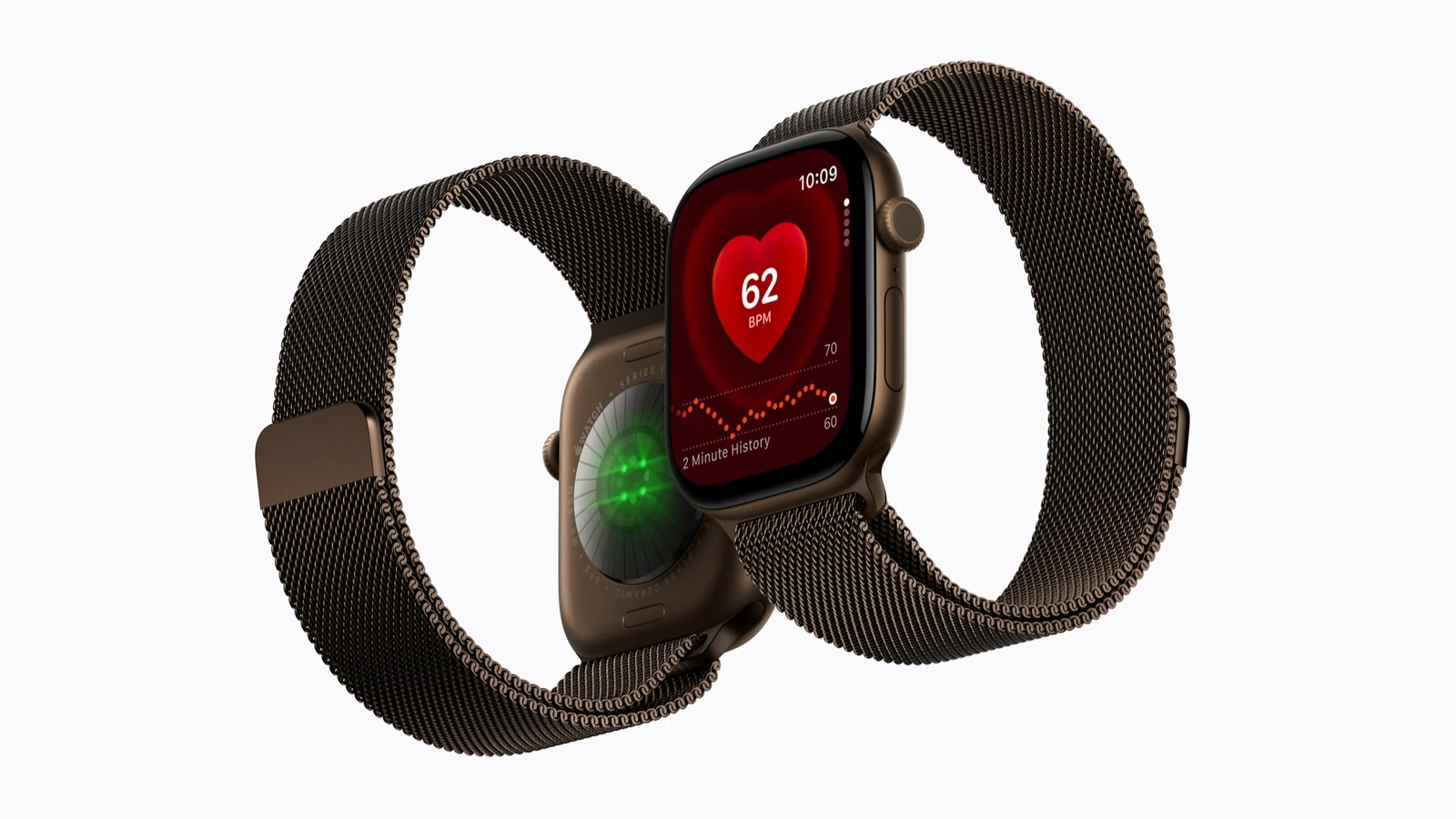
It measures movement, not breathing. Apple’s description of the metric is precise: Breathing Disturbances uses the accelerometer to detect small movements at the wrist associated with interruptions to normal respiratory patterns during sleep. The watch is not listening to you breathe and it is not measuring airflow. It is reading the tiny physical reactions your body makes when breathing is disrupted, all night, from your wrist.
Each night gets classified as Elevated or Not Elevated. One elevated night means very little on its own. People sleep badly for ordinary reasons, and a single restless night has no clinical weight here.
What matters is the pattern over time. The watch needs a minimum of 10 nights of sleep tracking inside a 30-day period, and it analyzes the accumulated data every 30 days. If the elevated readings are consistent across that window, you get a notification. If they are scattered or infrequent, you do not. This is the reason the feature cannot tell you anything in your first week of wearing it, and the reason people who wear a watch only on weekdays sometimes never trigger an analysis at all.
Turning it on
Open the Health app on iPhone, search for Sleep Apnea Notifications under Respiratory, and tap Set Up. Apple asks you to confirm your age and whether you have already been diagnosed with sleep apnea. Sleep tracking has to be enabled, and you have to actually wear the watch to bed, which is the part most people quietly skip.
Which Apple Watch Models Support It?
Sleep apnea notifications are available on Apple Watch Series 9 and later, Apple Watch Ultra 2 and later, and Apple Watch SE 3. Both the watch and the paired iPhone need to be on current software.
| Apple Watch model | Sleep apnea notifications |
|---|---|
| Series 9, Series 10, Series 11 | Supported |
| Ultra 2, Ultra 3 | Supported |
| SE 3 | Supported |
| Series 8 and earlier | Not supported |
| SE, SE 2, and the original Ultra | Not supported |
The cut-off is not arbitrary snobbery about older hardware. Apple validated the algorithm against specific accelerometer hardware and submitted that combination to regulators, and the clearance covers what was tested. An older watch has an accelerometer too, but not the one the clinical validation was run on.
Where Sleep Apnea Notifications Are Available
The feature needs regulatory clearance in each country, which is why availability is a map rather than a switch. It launched in September 2024 in more than 150 countries and regions, including the United States, the European Union and Japan, after Apple received marketing authorization from the US Food and Drug Administration. Apple’s watchOS feature availability page now lists it in over 180 countries and territories.
Canada
Canada was not in the first wave. Apple secured a medical device license from Health Canada, and sleep apnea notifications became available to Canadian users on 24 October 2024, roughly five weeks behind the initial launch. The feature works the same way there as anywhere else. The delay was a licensing timeline, not a different product.
If you travel, the setting follows your region rather than your location, so a watch set up in a supported country generally keeps working. Rather than trust any published list, including this one, check Apple’s own feature availability page for watchOS. It is updated as clearances land and it is the only version that is current.
What the Notification Means, and What It Does Not
A notification tells you that your watch recorded consistently elevated breathing disturbances over the evaluation period, and that this pattern is consistent with signs of moderate to severe sleep apnea. That is the entire claim. It is a signal worth acting on and it is not a diagnosis.
Apple states the limit directly. The Sleep Apnea Notifications feature is “not intended to diagnose, treat, or aid in the management of sleep apnea.” Elsewhere Apple puts it even more simply: your Apple Watch is not a medical device and is not intended to replace talking with your doctor for diagnosis, treatment or monitoring of sleep apnea. Sleep apnea is diagnosed through a sleep study, either in a lab or with a home test prescribed by a clinician, and nothing on your wrist substitutes for that.
The other half of this matters just as much and gets mentioned far less. Apple says that not all people with sleep apnea receive a notification. The feature is tuned to look for moderate to severe patterns, so mild sleep apnea can pass through it unremarked, and so can moderate cases in some people. If you snore heavily, wake gasping, or spend your days exhausted despite sleeping eight hours, a quiet watch is not evidence that you are fine. Tell your doctor about the symptoms regardless of what your wrist says.
The feature is also not designed for people who already have a diagnosis. Apple limits it to adults 18 or older who have not been diagnosed with sleep apnea, and if you are already using CPAP or under treatment, your clinician’s monitoring is the thing that counts.
What To Do If You Get a Notification
Contact your doctor. Apple’s instruction is exactly that: if you have not been diagnosed with sleep apnea, you should talk to your doctor. There is no version of this where waiting to see if it resolves is the better plan, and untreated moderate to severe sleep apnea carries real cardiovascular and daytime-safety consequences.
Bring the data with you. In the Health app, open the Respiratory section and find Breathing Disturbances, where you can view the past month, six months or year, then scroll to Export PDF. That PDF summarizes your recorded nights in a form a clinician can read in under a minute, and it turns a vague conversation about tiredness into a specific one. It is the single most useful output of the whole feature.
Expect the doctor to want a sleep study anyway. That is not a rejection of the watch data. It is how sleep apnea is actually diagnosed, and the watch has done its job by getting you into the room.
Frequently Asked Questions
How long before my Apple Watch tells me anything?
At least 30 days, and only if you slept with the watch on for a minimum of 10 of those nights. The analysis runs on a 30-day cycle, so a watch worn sporadically may go months without producing a result.
Can Apple Watch replace a sleep study?
No. A sleep study measures airflow, blood oxygen, breathing effort and brain activity under clinical conditions. Apple Watch measures wrist movement and infers a pattern from it. The watch is a screening prompt that reaches people who would never have booked a study at all.
Does it need cellular, or a nightly charge?
Neither. The analysis happens on the watch and iPhone, so no connection is required overnight. What it does need is enough charge to survive the night, which in practice means charging while you shower or wind down rather than while you sleep.
MacReview Verdict
This is one of the most genuinely useful things Apple has put on the watch, precisely because it is modest about what it claims. It will not tell you that you have sleep apnea. It will tell you that 30 nights of your own data look like the kind of pattern a doctor should see, and for a condition that goes undiagnosed in an enormous number of people, that nudge is worth a great deal.
Turn it on if you own a Series 9 or later, an Ultra 2 or later, or an SE 3, and you are willing to wear the watch to bed. The cost is one habit change and the setup takes a minute.
Do not treat it as a health check you have passed. If you snore, wake gasping or feel wrecked after a full night, take that to a doctor whether or not your watch has ever said a word. And if a notification does arrive, book the appointment. That is the whole point of the feature, and it is the only response that makes owning it worthwhile.