The short version: Apple announced the iPhone Duo today, its first foldable. A 7.6-inch inner display, a 5.4-inch outer display, Grade 5 titanium, a hinge with more than 100 components, and a price of $1,999. Pre-orders open Friday, October 16. It ships Friday, October 23. Everything below is sourced from Apple’s own press release, and where I am speculating, I will tell you I am speculating.
I have been writing about Apple hardware for a long time, and before that I spent years in electronics engineering, mostly low-voltage systems integration, including a stretch at Siemens and a lot of time in data centers. That background is why I read a foldable spec sheet differently than most people. I do not get excited about the screen. I get excited (or nervous) about the hinge, the thermals, and the antenna.
So let us do this properly. First the confirmed facts, then the part nobody can tell you yet.
What Apple confirmed today
Tim Cook did not introduce this one. John Ternus did, and Apple’s press release identifies him as “Apple’s CEO.” His line: “iPhone Duo is the most transformational change to iPhone since the original.”
That is a big swing for a company that usually saves “revolutionary” for the keynote and drops it by the time the press release goes out. Apple kept it in writing. Make of that what you will.
The two displays
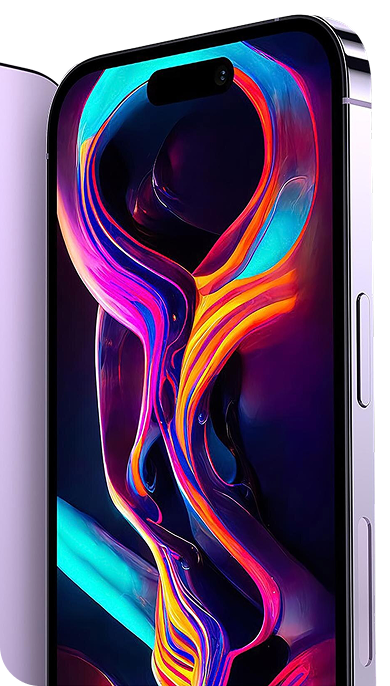
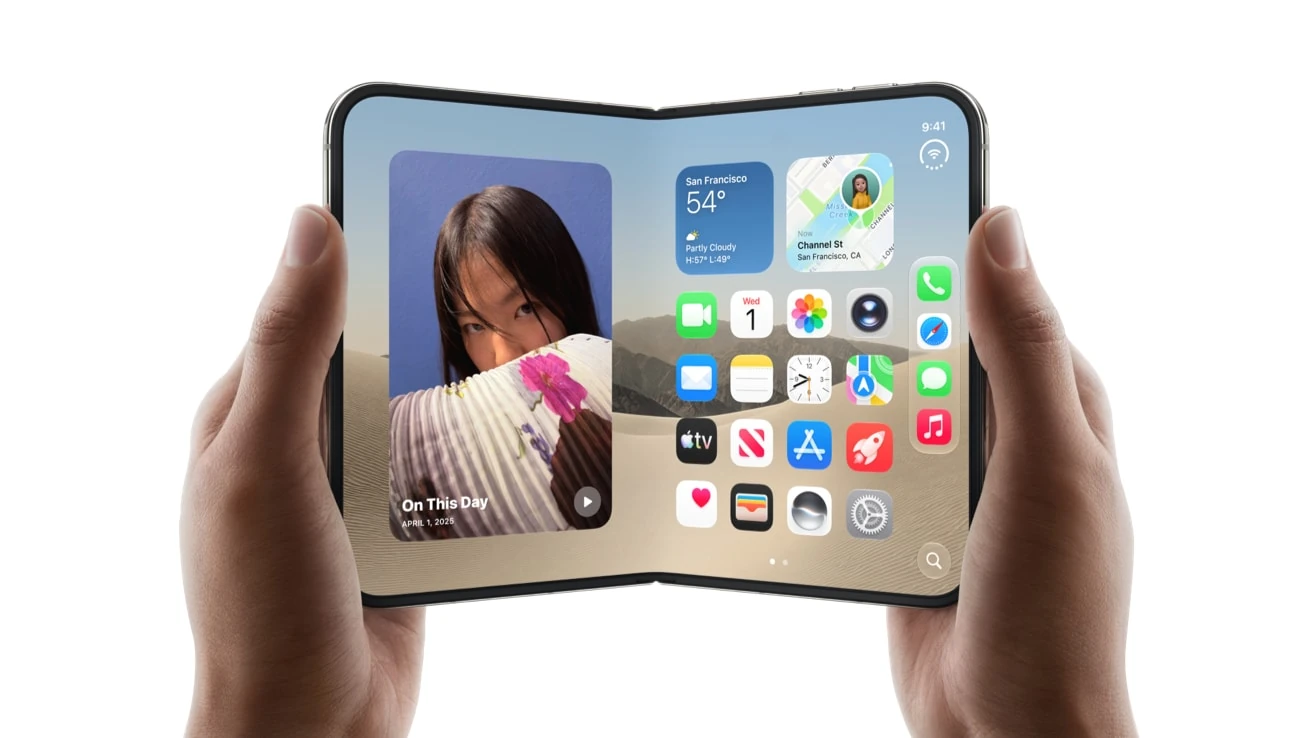
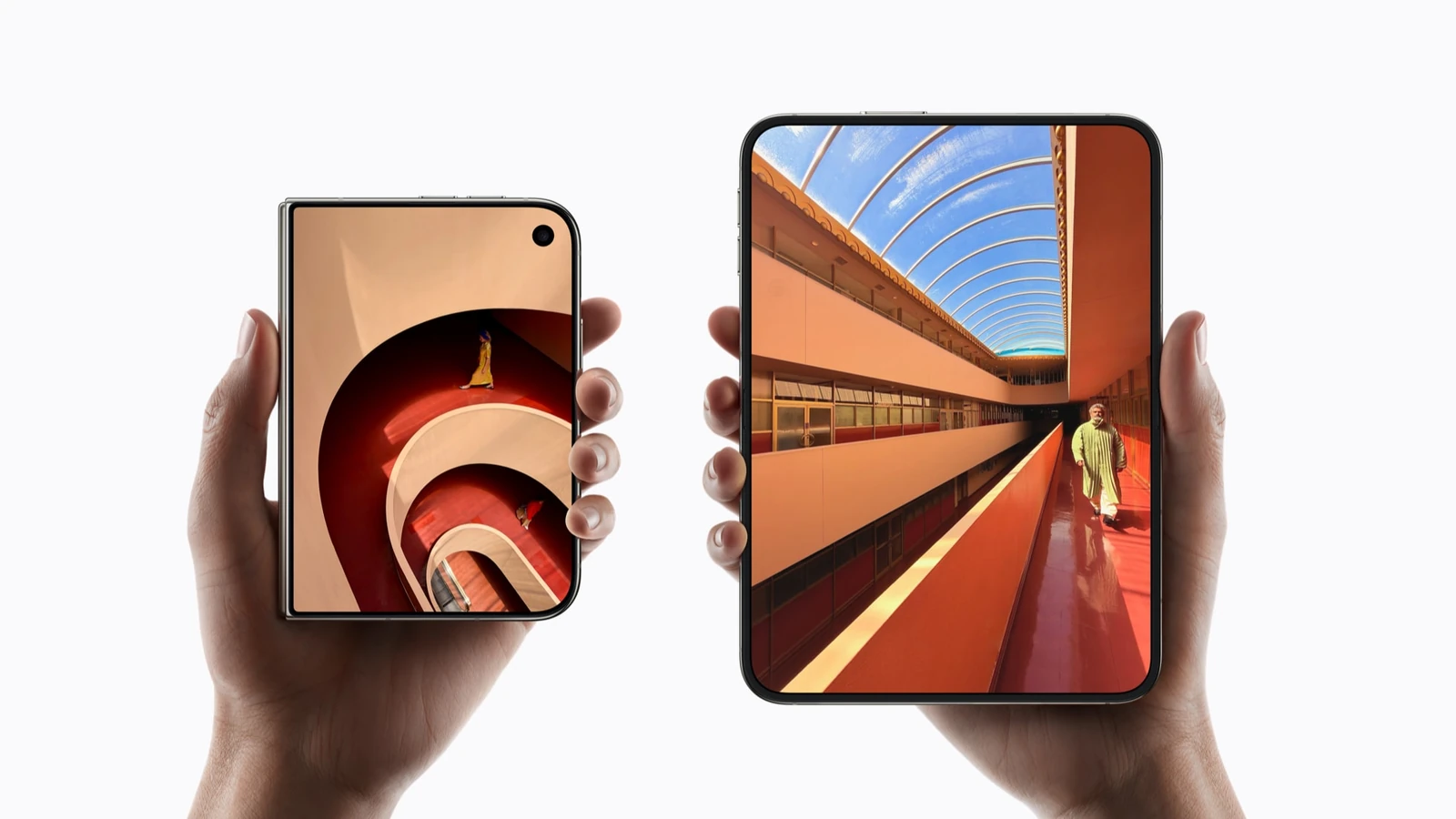
- Inner: 7.6-inch Super Retina XDR with a nano-texture finish
- Outer: 5.4-inch Super Retina XDR, which Apple says covers 90% of the iPhone 18 Pro’s screen area
- Both run ProMotion, both support Always On, both hit 3000 nits peak brightness
- Both share the same aspect ratio, so content scales proportionally when you open and close it
That last bullet is the one developers care about and consumers will never think about. A shared aspect ratio means an app does not have to redraw its entire layout when you unfold. It scales. Every foldable that has shipped with mismatched aspect ratios has produced the same ugly experience: you open the phone, the app reflows, you lose your place, and you get a half-second of jank. Apple engineered around that at the panel level rather than patching it in software, which is the more expensive and more correct answer.
The nano-texture finish on the inner display is the detail I did not expect. Apple has been putting nano-texture on Pro Displays and iPads as a matte anti-glare option. On a foldable inner screen, it does something else too: it scatters light across the crease. Whether that actually hides the crease or just makes it a matte crease instead of a glossy one is a thing you have to see in person, and I have not seen it in person. Nobody outside Apple has used one of these for more than a few minutes in a demo area today.
The hinge, which is the whole ballgame
Apple’s numbers: a precision hinge engineered from more than 100 components, a Grade 5 titanium enclosure with a mirror-polished finish, and a 3D-printed hinge cover with a micro-blasted finish.
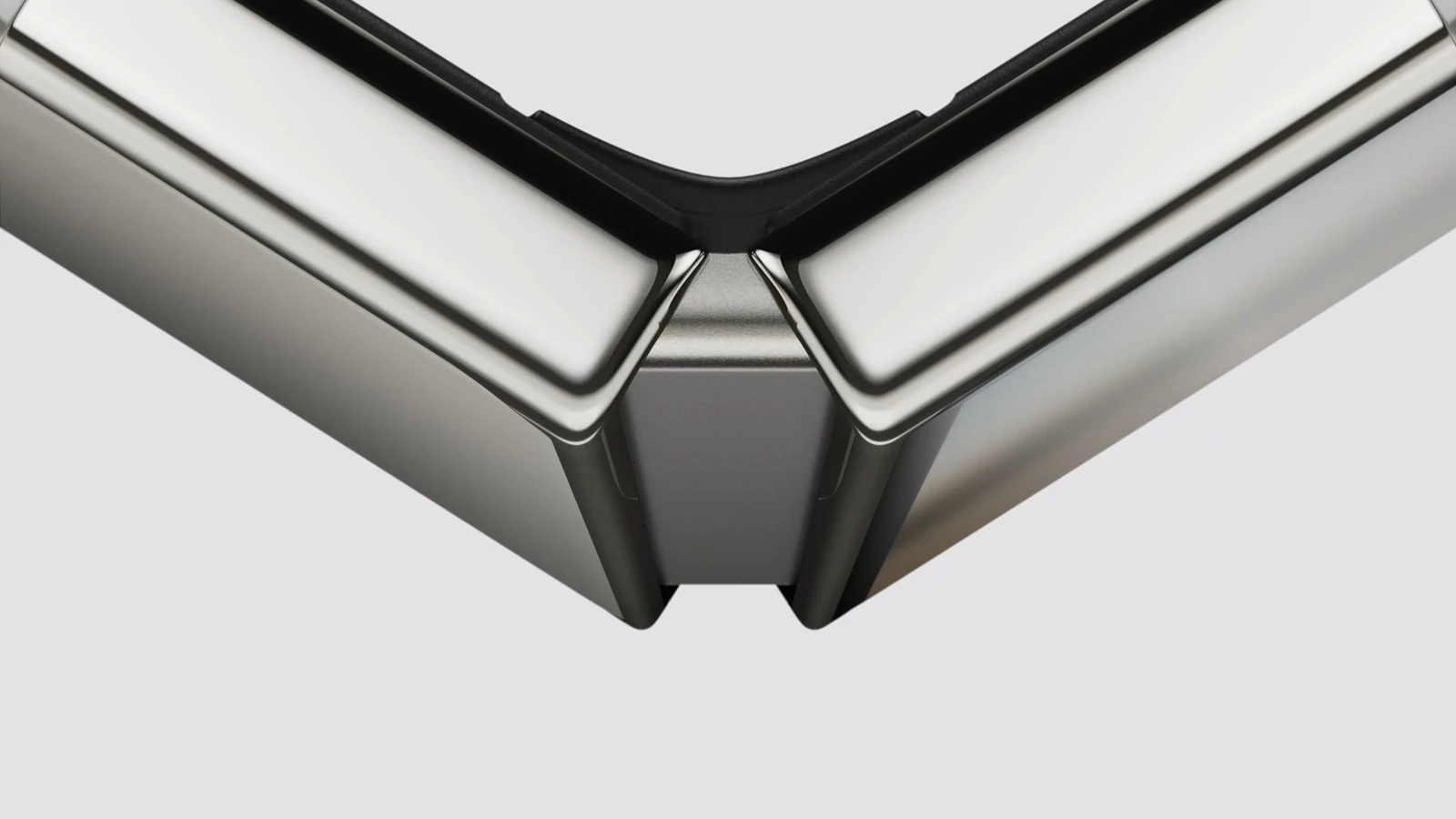
Let me translate the 3D-printed part, because it is not marketing fluff. Additive manufacturing for a structural part in a consumer product at iPhone volumes is genuinely unusual. You do it when the geometry is too complex to machine and too load-bearing to mold. A hinge cover has to be thin, has to be stiff, and has to follow a curve that changes as the device closes. That is a nightmare to CNC and a nightmare to injection mold. Printing it means Apple decided the geometry mattered more than the unit cost, which tells you they were solving a real problem, probably around debris ingress and edge stiffness.
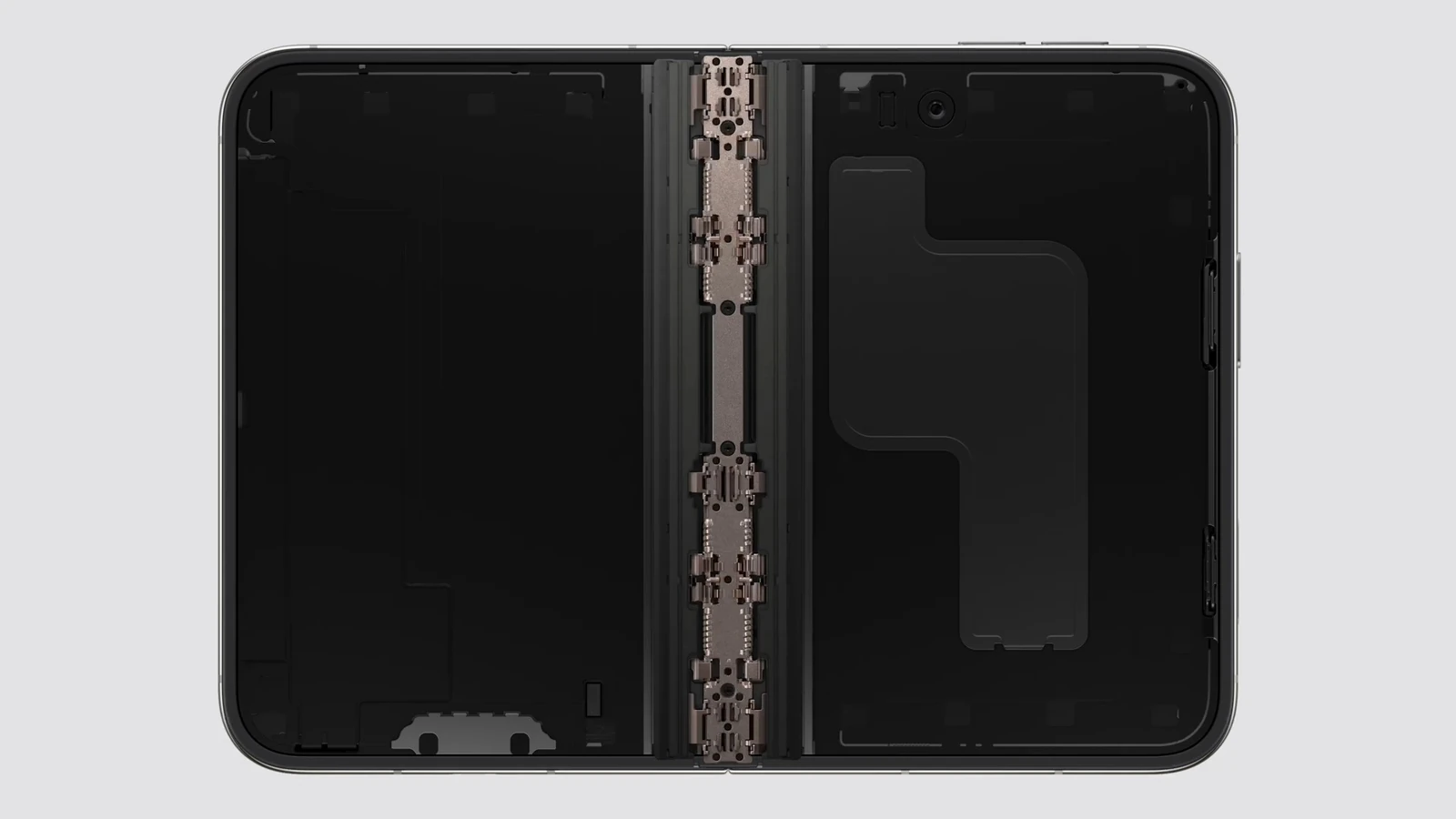
Grade 5 titanium (Ti-6Al-4V, for the two of you who care) is the same alloy family Apple moved to for the Pro line. On a foldable it matters more, because the chassis is doing structural work in two halves and the fatigue behavior across tens of thousands of cycles is what determines whether this thing is still flat in year three.
What Apple did not say: a fold-cycle rating. Samsung publishes one. Apple did not, at least not in the press release. That is the single most important durability number for a foldable and its absence is worth noting rather than hand-waving past. I will update this post the moment Apple publishes a figure or a teardown gives us one.
Durability and water resistance
- Ceramic Shield on the back
- Ceramic Shield 2 on the front, which Apple rates at 3x better scratch resistance
- IP68, rated at 6 meters for 30 minutes
IP68 on a device with a hinge is the headline engineering achievement here, and I want to be precise about why. The “6” in IP68 is the dust rating, and it means dust-tight. On a folding device with a moving seam, dust-tight is the hard half. Water you can gasket. Particulate that works its way into a hinge over months of pocket lint is the failure mode that has haunted every foldable ever made. Apple claiming a 6 means they believe they have sealed the hinge path itself.
Believe it after a year of real-world reports, not after a press release. But it is a claim no other manufacturer led with this confidently.
Silicon and thermals
The Duo runs the same A20 Pro as the iPhone 18 Pro, with a custom vapor chamber. Apple’s figures:
- 6-core CPU, 20% faster than A19 Pro
- 7-core GPU, 40% faster
- Dual 16-core Neural Engine, 2x the compute
- 35% better sustained performance than iPhone 17 Pro
The number that matters is the last one. Sustained performance, not peak. Peak performance is a benchmark score. Sustained performance is whether the phone is still fast eleven minutes into a 4K export.
Here is the thermal problem with a foldable, and it is not obvious: when the device is closed, you have roughly half the surface area to dump heat through, and you have two slabs of electronics pressed against each other. When it is open, you have a huge surface area but a very thin cross-section for conducting heat sideways across the hinge. Neither state is good. A vapor chamber is the right answer because it moves heat laterally without needing thickness, which is exactly the constraint a folding device imposes. Calling it “custom” for the Duo suggests it is shaped around the hinge rather than a flat plate borrowed from the Pro.
Cameras
- 48MP Fusion Main with an integrated 2x telephoto and zero shutter lag
- 48MP Fusion Ultra Wide
- Center Stage camera on the front
- A FaceTime camera underneath the inner display
- 4K120 Dolby Vision recording, Cinematic effects up to 60 fps
Note what is missing compared to the iPhone 18 Pro: no variable aperture on the Duo’s main camera. The Pro got the six-blade variable aperture system this year and the Duo did not, which is almost certainly a thickness problem. A mechanical iris assembly needs Z-height, and Z-height is the one thing a foldable does not have to give. (I wrote up the variable aperture system separately here, because it deserves its own piece.)
The under-display FaceTime camera is the spec I am most skeptical of, and I say that as someone who wants to be wrong. Every under-display camera shipped to date trades resolution and contrast for the invisible cutout. Apple putting one under the inner display only, while keeping a normal Center Stage camera on the outside, reads like a hedge: use the good camera for real calls, use the hidden one when you are already unfolded. Reasonable engineering. We will see how it holds up in a controlled test.
Battery
Dual high-energy batteries, which is the standard foldable approach (one cell per half, because you cannot bend a battery).
- Up to 31 hours of video on the inner display
- Up to 44 hours of video on the outer display
- Up to 24 hours of mixed usage
- 50% charge in about 20 minutes wired, about 30 minutes wireless via MagSafe or Qi2
The 13-hour gap between inner and outer display playback is the most honest number in the entire release, and I appreciate that Apple published it instead of quoting one figure. A 7.6-inch panel at 3000 nits eats power. If you live on the outer screen and only unfold for maps, video, and email, this thing lasts a very long time. If you unfold it every time it buzzes, plan accordingly.
Colors, storage, and price
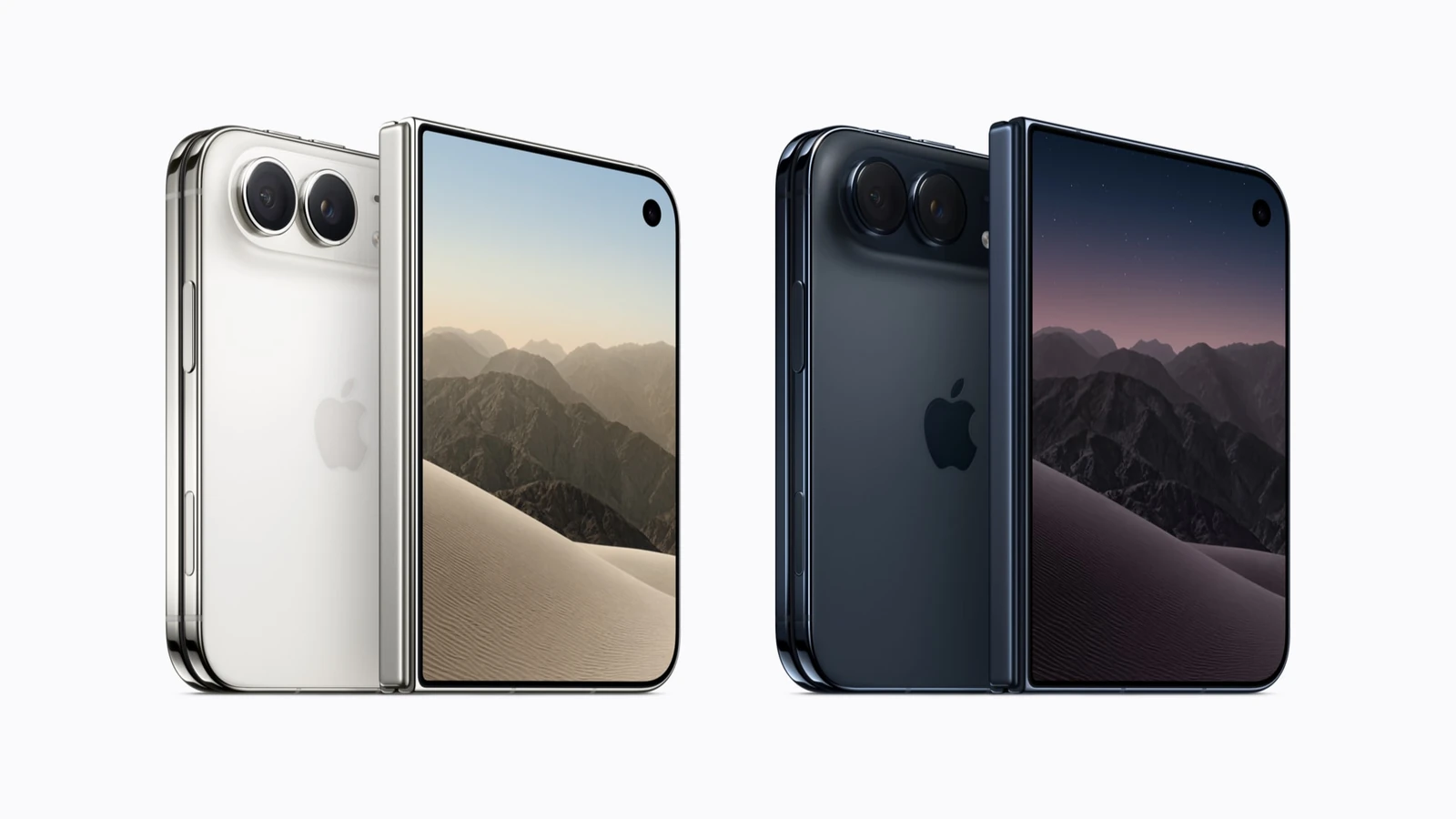
- Colors: star white and night sky
- Storage: 256GB, 512GB, 1TB, 2TB
- Price: starts at $1,999, or $83.29 per month for 24 months. Apple Upgrade starts as low as $57.99 per month for 24 months.
- Cases: iPhone Duo Case $79 (sand, navy blue). iPhone Duo Folio $129 (navy blue, taupe).
- Pre-order: Friday, October 16. Ships: Friday, October 23.
The five-week gap nobody is talking about
The iPhone 18 Pro pre-orders open September 12 and ship September 18. The Duo pre-orders open October 16 and ships October 23. That is a five-week separation, and it is deliberate.
Two readings, and I do not know which is right:
The charitable one: Apple does not want the Duo to cannibalize Pro launch coverage or Pro launch supply. Two separate news cycles, two separate sell-out headlines, twice the retail traffic.
The less charitable one: yields. When you build a part with a 100-component hinge and a 3D-printed structural cover, your factory does not go from zero to iPhone volume in a week. A staggered ship date buys five more weeks of production before the first customer unit has to exist.
Both can be true. Historically, when Apple splits a launch like this, supply is at least part of the story. If you want one on day one, set an alarm for October 16 and do not browse casually.
Where is the regular iPhone 18?
It is not here. Apple announced the iPhone 18 Pro and iPhone 18 Pro Max today and nothing else in the iPhone 18 line. Reporting ahead of the event, including MacRumors’ release-schedule tracking, has the standard iPhone 18 moving to spring 2027 as Apple splits the iPhone launch across two seasons.
Apple has not confirmed that timing. If you were waiting for the $799 iPhone 18, today was not your day, and the iPhone 17 is now the value play in the lineup.
What I cannot tell you yet, and will not pretend to
I have not held an iPhone Duo. Neither has anyone reading this. Any article you find today claiming to tell you “how it feels in the hand” is either recycling a hands-on area demo from a reporter who got four minutes with a demo unit, or making it up.
Here is exactly what I will test when a review unit lands at MacReview, in order:
- Crease visibility at angle. Not head-on under a softbox. At 30 and 45 degrees under overhead office fluorescents, which is where every crease shows up.
- Sustained thermal throttle, closed and open. A 20-minute 4K120 export in both states, logging frame times. The 35% sustained claim is testable and I intend to test it.
- Hinge torque over time. Does it hold at 90 degrees on day one and sag by month three? This is the number nobody publishes because it takes months to get.
- Dust ingress in real pockets. IP68 is a lab rating. Denim is not a lab.
- Under-display FaceTime camera versus the Center Stage camera, same lighting, same subject, side by side.
- Outer-display-only battery life, because that is how a lot of people are actually going to use this.
That list is the article I actually want to write. This one is just the facts.
Should you buy it?
I am not going to tell you to spend $1,999 on a first-generation folding anything based on a press release. That is not analysis, that is just enthusiasm with a link on it.
What I will say: first-generation Apple hardware has a consistent pattern. The original iPhone had no App Store and no 3G. The original Apple Watch was slow. The original Apple silicon Mac was flawless, so the pattern is not universal. Foldables specifically are a category where generation one has historically been where the durability lessons get learned, at customer expense.
If you are the person who wants it, you already know you want it, and you will be fine. AppleCare+ is a more defensible purchase on this device than on any iPhone Apple has ever sold, and I do not usually say that.
If you are on the fence, the fence is a great place to sit until independent teardowns and a few months of hinge reports exist. The phone will still be there in January, and by then we will all know a lot more.
I will update this post as Apple publishes more specifications and as we get the device in for testing. If Apple releases a fold-cycle rating, it goes in this article the same day.
Sources: All specifications, pricing, and dates in this article come from Apple’s press release, “Apple unveils iPhone Duo” (Apple Newsroom, September 9, 2026). Standard iPhone 18 timing per MacRumors. Product images credited to Apple Inc. MacReview is not affiliated with Apple Inc.
Disclosure: MacReview has not received an iPhone Duo review unit. No hands-on testing has been performed on this device. This article contains no affiliate links. When we do link to retailers, we disclose it and we may earn a commission.
Last updated: September 9, 2026. This is a developing story and will be updated as Apple publishes additional specifications.