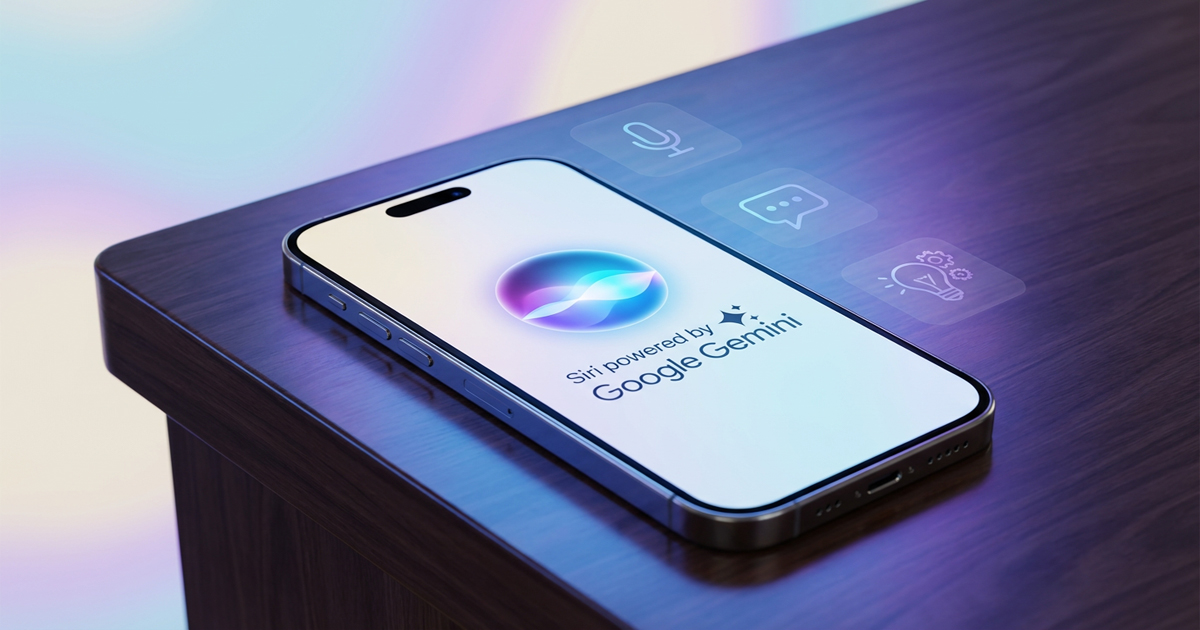
Apple has reportedly confirmed that Google’s Gemini will power new Siri features, marking a significant shift in how the company approaches artificial intelligence integration. This development represents one of the most substantial partnerships in Apple’s recent history and could fundamentally change how iPhone users interact with their devices.
Google Gemini Integration with Siri
According to recent reports, Apple is moving forward with plans to integrate Google’s Gemini AI models into Siri’s backend infrastructure. This partnership would allow Apple to leverage Google’s advanced large language model capabilities while maintaining its own user interface and privacy controls. The decision appears to reflect Apple’s strategy of combining external AI expertise with its proprietary ecosystem.
The integration is expected to enhance Siri’s conversational abilities, contextual understanding, and response accuracy. While Apple has made incremental improvements to Siri over the years, the assistant has consistently lagged behind competitors in natural language processing and complex query handling. Google’s Gemini models could address these longstanding weaknesses.
Apple’s Independent Fine-Tuning Approach
Reports suggest that Apple will not simply implement Gemini as-is, but will independently fine-tune the models to align with its standards and requirements. This approach would allow Apple to maintain control over how the AI behaves, what data it can access, and how it integrates with Apple’s privacy framework. The fine-tuning process likely involves training the models on Apple-specific use cases and implementing guardrails consistent with the company’s values.
This strategy mirrors Apple’s historical pattern of adopting third-party technologies while customizing them extensively for its ecosystem. The company has long maintained that it prefers to own the primary technologies in its products, but has shown willingness to partner strategically when doing so provides clear benefits to users.
Expected New iPhone Features
Multiple reports indicate that the Gemini integration could enable more than eight new features for iPhone users. While specific capabilities have not been officially confirmed, the partnership would likely enhance several areas of functionality:
- Improved natural language understanding for complex, multi-part queries
- Enhanced contextual awareness across apps and conversations
- More sophisticated summarization capabilities for long documents and web pages
- Better integration with third-party services and data sources
- Advanced reasoning abilities for problem-solving requests
- More nuanced and personalized responses based on user patterns
The timeline for these features remains unclear, though the reports suggest development is already underway. Apple typically operates on annual release cycles tied to iOS updates, which could mean these capabilities appear in a future iOS version rather than as immediate updates.
Privacy and Data Considerations
One of the most critical questions surrounding this partnership involves how Apple will handle user data and privacy. The company has built its brand reputation partly on privacy protection, frequently emphasizing that it does not monetize user data or share it unnecessarily with third parties. Integrating a Google-developed AI model presents obvious tensions with this positioning.
Apple will likely implement technical measures to process Siri requests in ways that minimize data exposure to Google. This could include on-device processing where possible, anonymization of queries sent to cloud services, and contractual limitations on how Google can use any data it receives. However, the specific technical architecture has not been publicly detailed.
Industry Context and Competitive Pressure
Apple’s decision to partner with Google for AI capabilities comes amid intense competition in the artificial intelligence space. Microsoft has integrated OpenAI’s technology deeply into Windows and its productivity suite. Google has deployed Gemini across its own products. Amazon continues to develop Alexa’s capabilities. Samsung has partnered with various AI providers for its Galaxy devices.
Apple’s relatively slower pace in delivering advanced AI features has drawn criticism from users and analysts. While the company has invested heavily in machine learning and has developed its own Apple Intelligence features, these have not matched the capabilities of competing offerings. The Gemini partnership appears to be Apple’s acknowledgment that it needs external expertise to remain competitive in this rapidly evolving space.
Potential Risks and Challenges
Relying on a competitor’s AI technology introduces several potential complications for Apple. The company will be dependent on Google’s continued development and support of Gemini models. Any limitations, failures, or controversies associated with Gemini could directly impact Siri’s performance and Apple’s reputation. Additionally, regulatory scrutiny of large tech partnerships could create legal or compliance challenges.
There is also the question of how users will perceive Apple products being powered by Google technology. Some of Apple’s most loyal customers specifically choose the company’s products to avoid Google’s ecosystem. Clear communication about how the partnership works and what protections are in place will be essential to maintaining user trust.
FAQ
Q: Will Google have access to my Siri conversations and personal data?
A: The specific data handling arrangements have not been publicly disclosed. Apple is expected to implement privacy protections, but the exact technical implementation remains unclear. Users should monitor official announcements from Apple regarding privacy safeguards.
Q: When will these new Gemini-powered Siri features become available?
A: No official release timeline has been announced. Based on Apple’s typical development cycles, these features would likely appear in a future iOS update, but the specific version and date remain unconfirmed.
Q: Will all iPhone models support these new features?
A: Device compatibility has not been announced. Apple typically limits advanced AI features to newer hardware with sufficient processing power, so older iPhone models may not support all capabilities.
Q: Can users opt out of the Google Gemini integration?
A: It is unclear whether Apple will provide options to use Siri without the Gemini-powered features. This will likely depend on how deeply the integration is implemented in the operating system.
MacReview Verdict
Apple’s reported partnership with Google to power Siri with Gemini models represents a pragmatic response to competitive pressures in artificial intelligence. While the move may surprise some observers given the companies’ rivalry in other areas, it aligns with Apple’s history of strategic partnerships when they serve user interests. The success of this integration will depend heavily on implementation details, particularly around privacy protections and performance improvements.
For iPhone users, the potential benefits include significantly improved Siri capabilities that could finally match or exceed competing assistants. However, legitimate questions remain about data handling, long-term dependency on a competitor’s technology, and whether Apple can maintain its privacy-focused brand identity while relying on Google’s AI infrastructure. As more details emerge about the technical architecture and rollout plans, users and observers will be better positioned to evaluate the implications of this significant shift in Apple’s AI strategy.