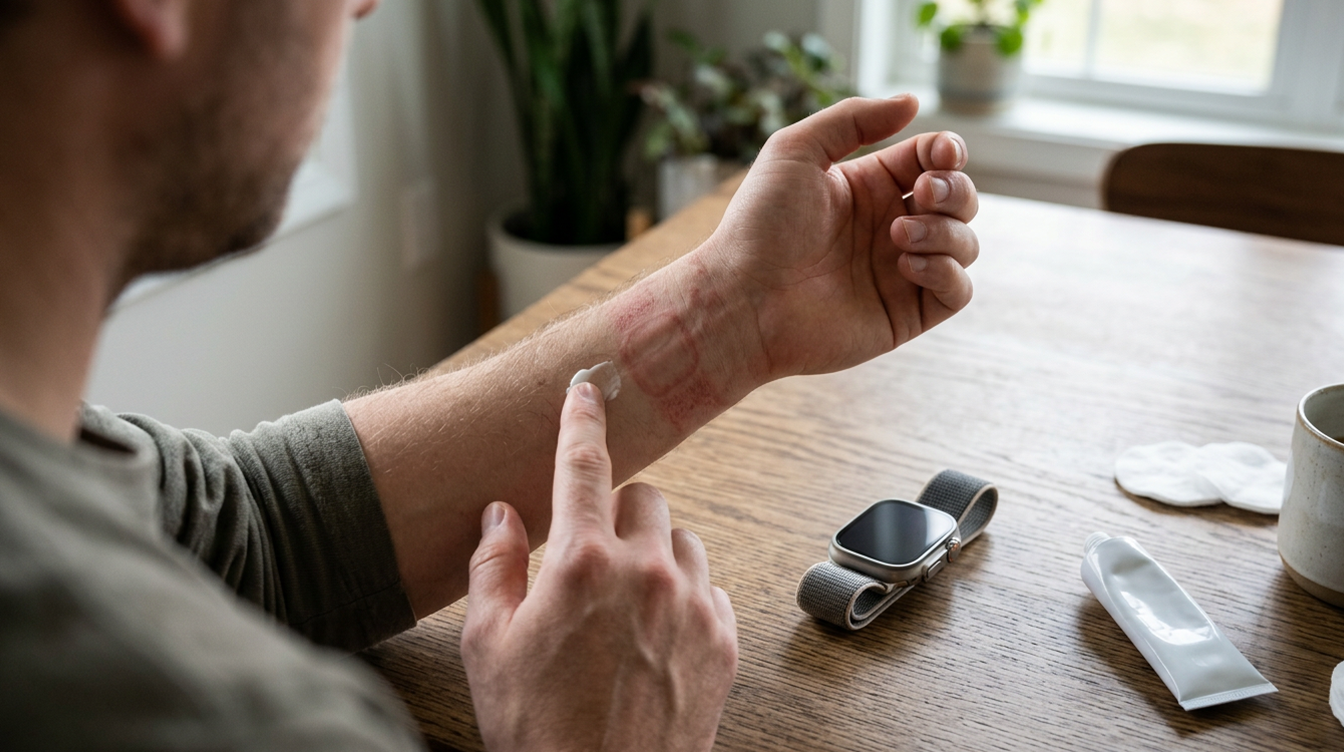
You pull off your new watch after a long day and find a pink, slightly angry patch sitting exactly where the sensor was. If that sounds familiar, you are in good company. A cluster of Series 12 and Ultra 4 owners have spent this week describing the same Apple Watch skin irritation: redness plus a burning feeling under the back of the watch.
The complaints are piling up on owner forums and Reddit, according to a report from MacRumors. Nobody has pinned the problem on the new hardware yet, and the first things worth trying are cheap, quick and mostly about fit and hygiene.
What Series 12 and Ultra 4 owners are describing
The reports follow a pattern. This Apple Watch skin irritation starts as warmth or a burning sensation, then a red mark, and it shows up under the sensor bump rather than along the strap.
Outcomes vary. A few owners say the redness faded once their skin got used to the watch, others credit a proper wipe-down of the watch back and band, and some sent the watch back.
Suspicion naturally falls on what is new this year. These models reportedly sample heart rate every five seconds, and the sensor module has grown a bigger ECG electrode, a ring of photodiodes and larger green LEDs (the same hardware behind the features in our explainer on Series 12 and Ultra 4 Health Age). None of those changes has been linked to the rash so far. Sore wrists are also nothing new, with similar complaints dating back to the first Apple Watch.
Why the sensor area gets the worst of it
The back of the watch has to stay in contact with you, because Apple says the heart sensors and Wrist Detect both rely on it. That makes the sensor bump the one spot pressed against your wrist all day, which is why Apple Watch skin irritation tends to start there.
Apple’s guide to wearing Apple Watch names the usual culprits behind Apple Watch skin irritation. A strap that is too tight can irritate, a strap that is too loose can chafe, and soap or sweat trapped under the case adds to both.
Materials get a mention too. Nickel turns up in some cases, bands and magnets, though Apple puts the levels under Europe’s strict REACH limits, and trace acrylates from adhesives are kept away from your skin by design.
6 fixes for Apple Watch skin irritation, easiest first
- Give your wrist a break. Leave the watch off until the redness calms down. If swelling, itching or redness hangs around, Apple says to check with a physician before wearing it again.
- Do the shake test. Shake your wrist, then flip your palm up. If the case lifts off your skin, the band is loose enough to rub, so tighten it a notch. Aim for snug but comfortable, with a little room for your skin to breathe.
- Slide it up your arm. Apple suggests wearing the watch just above the wrist bone, a bit closer to your elbow, instead of right on the bone.
- Clean the back and the band. Wipe the sensor area and the strap, then let both dry completely. Make it a habit after workouts and anything involving sunscreen or lotion.
- Dry your skin, not just the watch. A spotless watch on a damp wrist still traps moisture, and that alone can keep Apple Watch skin irritation going, so towel off before you strap it back on.
- Use the right band for sweat. Apple says leather, FineWoven, Milanese Loop, Link Bracelet and Hermès knit bands are not made for water or workouts, so switch to a sport band when you train. Solo Loop owners should also check for slack, because Apple notes those bands can stretch with time. Our roundup of Apple Watch band styles covers the options.
Can a watchOS update fix the rash under the sensor?
Possibly, but only in one scenario. If the faster heart rate sampling turns out to matter, a software update could change how often the sensors fire. If the cause is fit, sweat or a material sensitivity, no update will touch it.
So far the only guidance on record is Apple’s general wearing advice, so there is no promised fix to hold out for. If you bought the watch recently and the Apple Watch skin irritation returns after you have cleaned it and fixed the fit, a return or exchange inside your return window is a sensible move.
Apple Watch rash questions, answered
Why do I get an Apple Watch rash under the sensor?
The sensor sits against your skin all day, so sweat, soap and lotion collect there. Apple also points to bands that are too tight or too loose, and says nickel or adhesive sensitivity is possible but unlikely for most people.
What should I do if my Apple Watch rash won’t go away?
Stop wearing the watch and talk to a physician. Apple advises getting medical advice before putting the watch back on if redness, swelling or itching continues.
Can an Apple Watch rash come from the band?
Yes. Fit matters: a strap pulled tight presses on the skin, while a loose one slides around and chafes. Apple also says leather and FineWoven bands are not meant for workouts, so a sport band is the better pick when you sweat.
Should you keep wearing a Series 12 that irritates your skin?
If the redness is mild and fades once you adjust the fit and keep things clean, keep wearing it and keep an eye on your skin. If it burns, swells or keeps coming back whatever you change, take the watch off, see a doctor and lean on that return window. Apple treats most Apple Watch skin irritation as a fit and cleanliness issue, but your wrist gets the final vote.