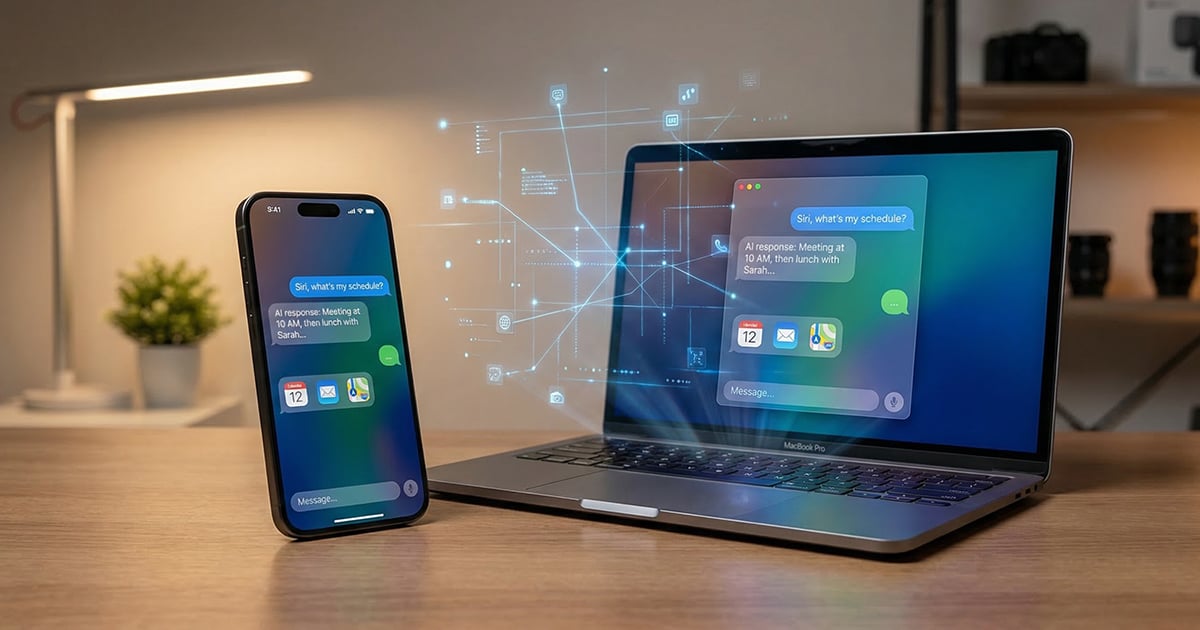
Apple is reportedly planning to introduce a chatbot interface for Siri as part of iOS 27, marking a significant shift in strategy after previously dismissing this approach. The change comes as the company prepares to integrate Google’s Gemini models into Siri, potentially addressing one of the assistant’s most persistent shortcomings: its inability to maintain conversational context.
From Revolutionary to Embarrassing: Siri’s Journey
When Apple launched Siri with the iPhone 4S in 2011, the voice assistant represented a major step toward what had previously existed only in science fiction. For early adopters, Siri’s capabilities seemed genuinely impressive and forward-looking.
Fast forward to 2026, and Siri has become widely regarded as lagging behind competitors. While Apple has promised improvements for years, the gap between expectations and performance has only widened as Google Assistant, Amazon Alexa, and ChatGPT-powered alternatives have evolved.
Google Gemini: The Foundation of the New Siri
Apple confirmed in January 2026 that Google’s Gemini models will power enhanced Siri features. This partnership represents a dramatic departure from Apple’s original plan to rely solely on Apple Intelligence for Siri’s improvements.
Gemini is now widely considered equal to or superior to OpenAI’s ChatGPT models in many respects. Google’s beta launch of Gemini-powered Personal Intelligence features offers a preview of what users might expect: the ability to draw from complex source combinations, including personalized information from Apple apps and services.
Agentic AI Capabilities
The Gemini integration is expected to enable Siri to function as an intelligent agent that can complete tasks across multiple apps. For example, a user might ask Siri to book a dinner reservation at a previously visited restaurant. The assistant could potentially retrieve the restaurant name from text messages, Apple Maps history, or photo metadata, then use a reservation app to complete the booking.
This agentic approach represents what many analysts believe will be the most transformative development in AI assistants, moving beyond simple queries to actual task completion.
Why Add a Chatbot Interface?
Apple reportedly expressed skepticism about chatbot interfaces for onboard assistants prior to this decision. The company appeared focused primarily on agentic capabilities rather than conversational exchanges.
However, a chatbot interface addresses one of Siri’s most glaring weaknesses: contextual awareness. Current Siri implementations frequently fail to maintain context even across immediately sequential questions.
The Context Problem
A typical example of Siri’s context failures might look like this:
- User: “Who played Batman in the most recent movie?”
- Siri: “Robert Pattinson was cast as Bruce Wayne/Batman in May 2019”
- User: “What about Robin?”
- Siri: “I don’t know who Robyn is”
This inability to maintain conversational thread is where chatbot interfaces excel. Modern chatbot systems can handle progressively complex conversational flows, understanding references to previous topics even when users employ vague language. Some chatbots can even reference discussions from days or weeks earlier.
A Two-Stage Strategy
Apple’s reported approach combines agentic AI with chatbot capabilities, suggesting the company recognizes that both serve valuable but different purposes. Agentic AI excels at task completion across apps and services, while chatbot interfaces enable natural conversational flows and contextual understanding.
This dual approach could position Siri to compete more effectively with assistants that have already implemented conversational AI, while also pushing toward more practical task automation that goes beyond simple question-and-answer exchanges.
Expected Challenges
Standard chatbot limitations will likely apply to the new Siri implementation. Users should anticipate occasional incorrect answers, outdated information, and potential hallucinations where the AI confidently presents false information as fact.
Additionally, the integration of Google’s technology into Apple’s ecosystem may raise questions about data privacy and server-side processing. Reports suggest the chatbot functionality may run on Google servers rather than Apple’s infrastructure, which could have implications for how user data is handled.
Timeline and Availability
The chatbot interface is reportedly planned for iOS 27, though Apple has not confirmed this timeline. Given that iOS 19 is expected in 2025, iOS 27 would likely arrive in 2027 or potentially later, depending on Apple’s versioning approach.
The Gemini-powered improvements are expected to roll out in stages, with agentic capabilities potentially arriving before the full chatbot interface implementation.
FAQ
Q: Will the new Siri chatbot work offline?
A: This has not been confirmed. Given that reports suggest processing may occur on Google servers, offline functionality may be limited compared to current basic Siri commands that can work without internet connectivity.
Q: When will these Siri improvements become available?
A: The chatbot interface is reportedly planned for iOS 27, though Apple has not announced a specific release timeline. Gemini-powered agentic features may arrive earlier in stages.
Q: Will this work on older iPhone models?
A: Device compatibility has not been announced. However, based on Apple Intelligence requirements for Apple’s AI features, it is likely that newer hardware will be required for full functionality.
Q: How will Apple handle privacy with Google’s technology powering Siri?
A: Apple has not detailed the privacy arrangements for Gemini integration. The company will likely need to address how user data is processed and whether Google will have access to queries and personal information.
MacReview Verdict
Apple’s reported decision to add a chatbot interface to Siri represents a pragmatic acknowledgment that conversational AI has become table stakes for modern voice assistants. While the company’s initial focus on agentic AI was well-founded, Siri’s persistent inability to maintain conversational context has remained a critical weakness that undermines user confidence.
The combination of Gemini-powered agentic capabilities with chatbot-style conversational flows could finally position Siri as a competitive option against assistants that have long surpassed it in practical usability. However, the success of this strategy will depend heavily on execution, privacy protections, and whether Apple can deliver on promises that have repeatedly been delayed.
For iPhone users who have watched Siri fall further behind competitors year after year, this two-pronged approach offers genuine reason for optimism, provided Apple can navigate the technical and privacy challenges inherent in relying on Google’s infrastructure for core functionality.