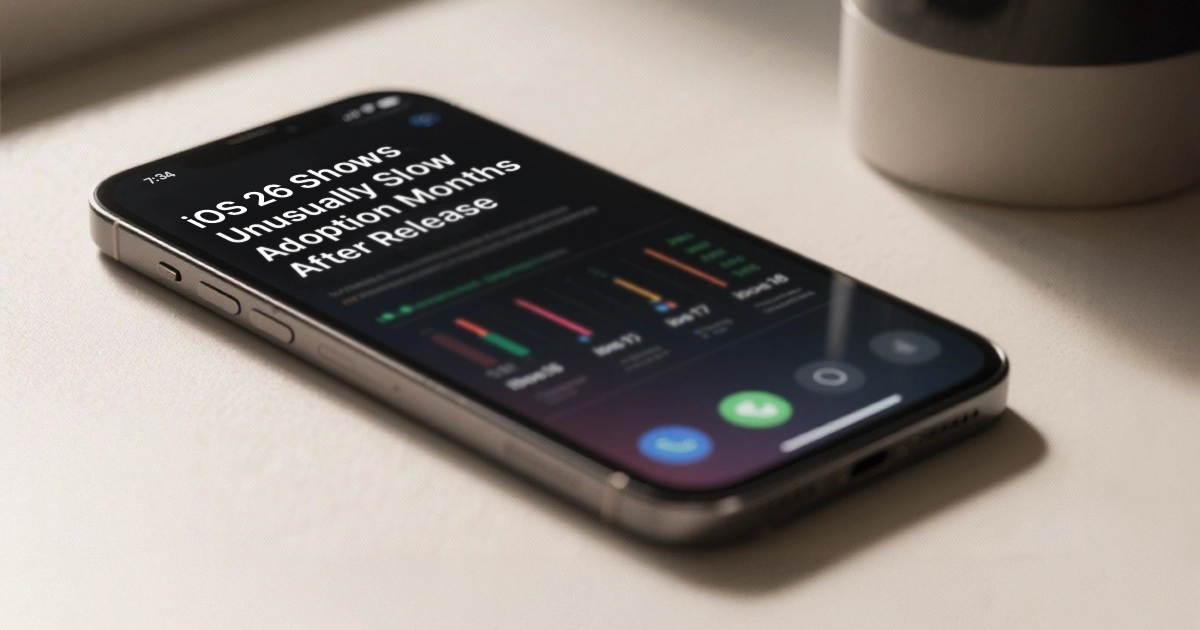
Apple’s iOS 26 is experiencing significantly slower adoption rates compared to recent iOS releases, with new analytics data suggesting users are hesitant to upgrade. This marks a notable departure from the typical upgrade patterns seen with iOS 18, iOS 17, and iOS 16, raising questions about the reception of the update’s visual overhaul and feature set.
Adoption Numbers Show Unusual Hesitation
According to third-party usage data from StatCounter for January 2026, only approximately 15 to 16 percent of active iPhones worldwide are reportedly running any version of iOS 26. The breakdown indicates that iOS 26.1 accounts for roughly 10.6 percent of devices, iOS 26.2 represents about 4.6 percent, and the original iOS 26.0 release sits at approximately 1.1 percent.
In stark contrast, more than 60 percent of iPhones tracked by StatCounter remain on iOS 18, with iOS 18.7 and iOS 18.6 alone representing a majority of active devices. These figures suggest that a substantial portion of the iPhone user base is choosing to stay on the previous operating system rather than upgrade.
Historical Context Reveals Significant Gap
When compared to previous iOS releases, the iOS 26 adoption curve appears markedly different. StatCounter data from January 2025 shows that roughly 63 percent of iPhones were running some version of iOS 18 about four months after its release. Looking further back, iOS 17 had reached approximately 54 percent adoption by January 2024 over a similar timeframe, while iOS 16 surpassed 60 percent adoption by January 2023.
Based on these historical figures, iOS 26 adoption appears to be running at less than one-quarter of the rate achieved by recent predecessors during the same post-release window. This represents an unprecedented slowdown in upgrade momentum for a major iOS release.
Analytics Sources and Limitations
StatCounter derives its estimates from web traffic analytics, tracking operating system versions via page impressions across its global network of participating websites. While this methodology provides useful directional data, it does have limitations and may not perfectly represent the entire iPhone user base.
Additional internal analytics paint a similar picture. In the first week of January last year, 89.3 percent of visitors to tech sites used a version of iOS 18. This year, during the same time period, only 25.7 percent are reportedly running a version of iOS 26. In the absence of official numbers from Apple, which the company has not released publicly in recent years, the true adoption rate remains unconfirmed, though multiple data sources suggest a pattern of hesitation.
Liquid Glass Design May Be a Factor
Unlike many previous releases, iOS 26 reportedly introduces Liquid Glass as a fundamental visual overhaul, replacing large portions of the traditional opaque interface with translucent layers, blurred backgrounds, and dynamic depth effects across system elements. Upon its announcement at WWDC last year, the redesign received mixed reviews from developers and early testers.
This polarizing visual refresh could be a contributing factor to hesitation around upgrading. Some users have expressed concerns about readability, accessibility, and the overall usability of the new translucent interface elements. While iOS 26 reportedly includes options to tone down the effect, the fundamental nature of the redesign appears to have given some users pause.
Security Update Policy Removes Pressure
Another significant factor in the slow adoption rate is Apple’s continued support for older operating systems with security updates. The company now allows users to remain on iOS 18 without immediate pressure to update or forfeit critical security patches. This policy shift makes it considerably easier for users to remain on older software if they prefer, removing one of the traditional incentives to upgrade.
This approach reflects a broader industry trend toward supporting multiple versions of operating systems simultaneously, giving users more choice but potentially fragmenting the user base across different software versions.
Implications for Developers and Users
The slower adoption rate of iOS 26 presents challenges for app developers who must decide whether to build for the new features and design language or maintain compatibility with the large user base still on iOS 18. This fragmentation could slow the rollout of apps that take full advantage of iOS 26 capabilities.
For users, the data suggests that many are taking a wait-and-see approach, likely monitoring feedback and bug fixes before committing to the upgrade. This cautious stance is relatively unusual in the Apple ecosystem, where major iOS updates have historically seen rapid adoption driven by new features and improvements.
FAQ
Q: Can I still use iOS 18 and receive security updates?
A: Yes. Apple is reportedly continuing to provide security updates for iOS 18, allowing users to remain on the previous operating system without sacrificing protection against security vulnerabilities.
Q: What is Liquid Glass in iOS 26?
A: Liquid Glass is reportedly a visual design overhaul in iOS 26 that introduces translucent layers, blurred backgrounds, and dynamic depth effects across system interface elements. It represents a significant departure from the more opaque interface design of previous iOS versions.
Q: Will app developers still support iOS 18?
A: With more than 60 percent of users reportedly still on iOS 18, most developers are likely to continue supporting it for the foreseeable future. However, new features that rely on iOS 26 capabilities may only be available to users who upgrade.
Q: Is iOS 26 stable enough to upgrade?
A: iOS 26.2 is currently available, suggesting that Apple has released multiple point updates to address issues since the initial release. As with any major operating system update, stability can vary by device and individual use cases. Users concerned about stability may want to wait for additional updates or research known issues with their specific device model.
MacReview Verdict
The unusually slow adoption of iOS 26 represents a significant shift in iPhone user behavior and likely reflects genuine concerns about the Liquid Glass redesign and overall user experience. With adoption rates running at less than one-quarter of previous iOS releases during comparable timeframes, it’s clear that Apple faces an uphill battle convincing users to upgrade. The combination of a polarizing visual overhaul and Apple’s policy of continuing security support for iOS 18 has created conditions where users feel comfortable staying put. For Apple, this may serve as valuable feedback about the balance between innovation and user preference, particularly when it comes to fundamental interface changes. Whether iOS 26 adoption accelerates as more refinements are released or continues to lag behind historical patterns will be an important indicator of user sentiment toward Apple’s design direction.